On this page
A closer look
Rain and snow steal heat from the surrounding air
The cumulonimbus clouds (towering thunderheads) that produce thunder have strong updrafts inside them. According to an explanation from the Osaka Science Museum, when snow and hail that have grown in the upper part of the cloud become too heavy for the updraft to hold up and start to fall, they drag the cold air around them down too, and a downdraft begins. This is what the video means by "cold air from high up comes down along with the rain."
But that's not the only source of the chill. As the falling snow and hail reach air warmer than 0°C (32°F), they melt into rain, and in dry air some of it evaporates into water vapor. Both melting and evaporating take heat from the surrounding air, so the air cools, becomes heavier, and the downdraft grows even stronger.
In fact, air that descends from high up gets compressed and warms. The U.S. National Weather Service explains that as long as cooling from evaporating raindrops (evaporative cooling) continues, the air keeps getting colder, but once the moisture has fully evaporated, the sinking air is compressed and begins to warm. An easy way to think about it: cold air reaches the ground beneath a thunderstorm because rain and snow keep taking heat away as they melt and evaporate.
Cold air spreads out along the ground
When the cold downdraft hits the ground, it spreads out in all directions along the surface. This is called an "outflow," and its leading edge, where it collides with the surrounding warm air, is called the "gust front." The Japan Meteorological Agency describes the gust front as the boundary between the leading edge of cold air blowing out of a cumulonimbus cloud and the surrounding air, often accompanied by strong gusts. The U.S. National Severe Storms Laboratory (NSSL) also says that when a gust front passes, the wind shifts, the temperature drops, and the wind picks up.
On top of the actual drop in temperature, the wind blowing makes it feel even cooler to your body. Just as the video says, this is what's behind that cool feeling around a thunderstorm.
By the way, this cold air can sometimes arrive before the rain. According to NSSL, gusty cold air can blow in ahead of a thunderstorm, and Japan's Sendai Regional Headquarters of the JMA lists "a sudden cold wind" as one of the signs that a cumulonimbus cloud is approaching. So that cool feeling doesn't just come "after the thunder"—it can also be a warning that a storm is on its way.
A "downburst" means a strong gust
The video introduced this cold sinking wind as a "downburst," but strictly speaking, that's not quite right.
In the Japan Meteorological Agency's terminology, a downburst is "a strong downdraft from a cumulus or cumulonimbus cloud that strikes the ground and blows outward as a gust." The outflow spreads from a few hundred meters to about 10 kilometers (about 6 miles) across and can damage buildings and trees. Smaller ones less than 4 kilometers (about 2.5 miles) across are called "microbursts," and they are dangerous for planes taking off and landing.
In other words, most of the cool wind you feel after a thunderstorm is an ordinary outflow. It's best to think of "downburst" as the term for cases where the downdraft is especially strong, turning into gusts powerful enough to cause damage.
Even if it cools off, stay alert while lightning is nearby
NSSL warns that even when the rain eases as a thunderstorm weakens, the danger of lightning remains. The Japan Meteorological Agency also advises the following:
- If you hear thunder or see other signs that a thundercloud is approaching, a lightning strike is imminent. Get to a safe place right away.
- Reinforced concrete buildings, cars (but not convertibles), buses, and trains are relatively safe.
- Being near tall trees is dangerous. Stay at least 2 meters (about 6.5 feet) away from the trunk, branches, and leaves.
- If there's no safe place nearby and you've had to wait it out outdoors by crouching low, wait until at least 20 minutes after the lightning activity has stopped before moving to a safe place.
When you feel a cold wind, before celebrating that it's cooled off, keep an eye on the sky and an ear out for thunder.
Related reads
What the video says
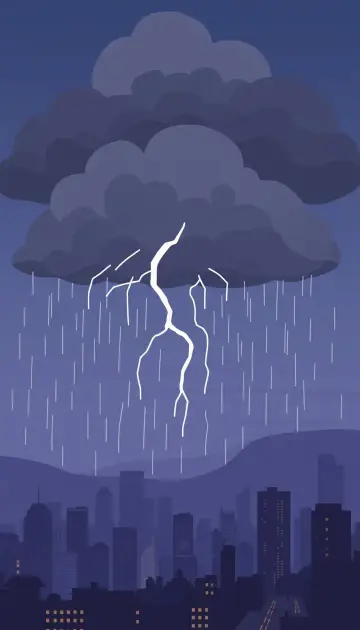
Have you ever noticed that after a heavy thunderstorm on a summer evening, the air somehow feels cool?

It turns out that's because cold air from high up comes down to the ground along with the rain.
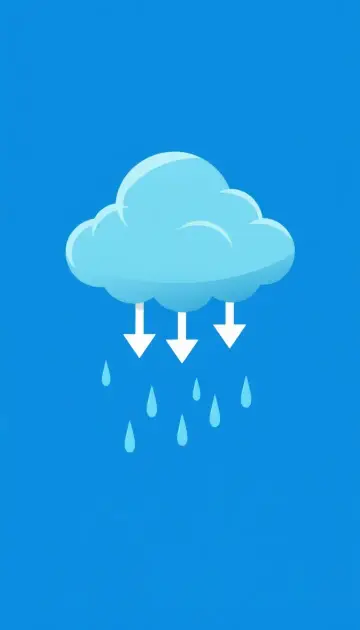
Thunderclouds have strong updrafts inside them, but once the rain starts, the water droplets chill the surrounding air as they come crashing down to the ground.
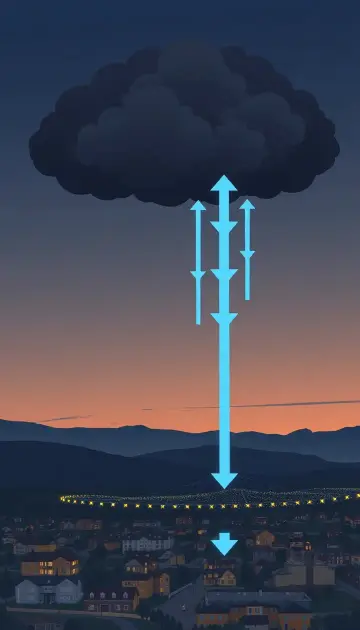
This cold sinking wind is called a "downburst," and it's the real reason the air feels cool after the rain.

That's why, after a thunderstorm, it feels noticeably cooler and more refreshing.
Sources
- 積乱雲(窮理の部屋158)Japanese“Cumulonimbus Clouds (Kyuri no Heya, No. 158)”Saori Nishioka, Osaka Science Museum, Gekkan Uchu (Monthly Universe), 2018
- 予報用語「風」Japanese“Forecast Terms: "Wind"”Japan Meteorological Agency
- 竜巻などの激しい突風とはJapanese“What Are Tornadoes and Other Violent Gusts?”Japan Meteorological Agency
- 雨が降る仕組み/急な大雨から身をまもるJapanese“How Rain Forms / Protecting Yourself from Sudden Heavy Rain”Sendai Regional Headquarters, Japan Meteorological Agency
- Severe Weather 101: Thunderstorm BasicsNOAA National Severe Storms Laboratory (NSSL)
- Severe Weather 101: Damaging Winds TypesNOAA National Severe Storms Laboratory (NSSL)
- Georgetown Heat BurstNational Weather Service (NWS) Wilmington Forecast Office
- 雷から身を守るにはJapanese“How to Protect Yourself from Lightning”Japan Meteorological Agency
Spotted a mistake in the article or the translation? Let us know.
Report an error (contact form in Japanese, opens in a new tab)