On this page
A closer look
A million-fold difference in speed
The Japan Meteorological Agency's explanation puts the two speeds side by side.
The sound of thunder is carried by vibrations in the air, and it travels about 340 meters per second.
Light, on the other hand, is an electromagnetic wave, so it can travel as far as about 300,000 kilometers per second.
Then it sums it up in a single line: "That's about a million times faster than sound."
The key point is that the light and the sound aren't produced at different moments. The same page says, "When lightning strikes, the light and the sound are produced at almost the same time, but because light travels much faster than sound, the sound reaches you later." It adds, in parentheses, "The same is true of fireworks."
The count only tells you distance
The JMA does mention counting the seconds.
Sound travels at about 340 meters per second, so if you count how many seconds pass between the flash and the sound, you can tell how close the lightning is.
However, the JMA's own disaster-prevention page clearly rejects using this count as a safety check.
If you hear thunder in the distance, you are already in danger. Lightning could strike where you are at any moment.
Thinking "It was ten seconds, so I'm fine" doesn't hold up. The agency's position is that once you can hear thunder, you're already within range of a lightning strike. The same page also states, "About 80% of people who are struck directly by lightning die."
Sheltering under a tree is the most dangerous thing you can do
What the JMA specifically warns against is taking shelter from the rain.
Almost all deaths and injuries among people sheltering from rain under trees are caused by side flashes
A side flash is when electric current jumps from a tree that's been struck to a nearby person. The page "How to Protect Yourself from Lightning" says, "Being near tall trees is dangerous, so stay at least 2 meters away from every part of the tree—its trunk, branches, and leaves."
Where to go
The safe places and guidelines listed on that page are worth remembering.
- Safe spaces: "The inside of reinforced-concrete buildings, cars (not convertibles), buses, and trains are relatively safe spaces. The inside of wooden buildings is also basically safe, but it's even safer if you stay at least 1 meter away from all electrical appliances, the ceiling, and the walls."
- When there's nowhere to go: "Move to a spot where you look up at the top of a tall object—such as a utility pole, chimney, steel tower, or building—at an angle of 45 degrees or more, and stay at least 4 meters away from that object (the protected zone)."
- When to move again: "Wait until the lightning activity has stopped and at least 20 minutes have passed, then move to a safe space."
Counting the seconds is a fun way to estimate distance. But if you hear thunder, the right move is to act before you start counting.
Related reads
What the video says
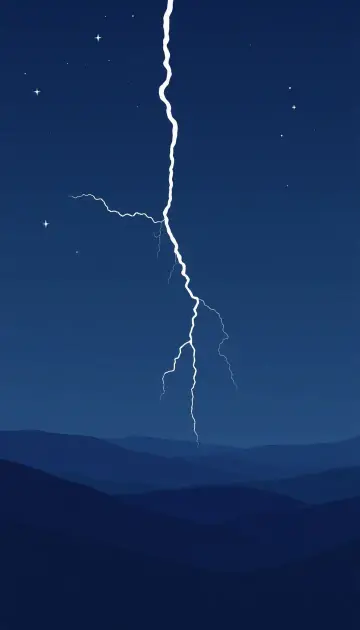
Lightning is a common sight in summer. Have you noticed there's a short pause between the flash and the sound?

That's actually because light and sound travel at different speeds.

Light is so fast it could circle the Earth seven and a half times in one second. It reaches your eyes almost instantly.

But sound only travels about 340 meters per second. It moves much more slowly than light.
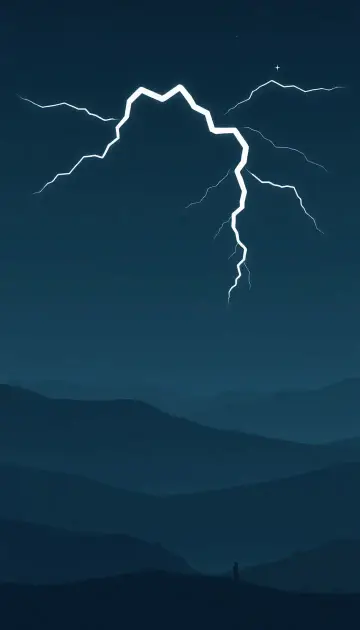
So if you count the seconds between the flash and the sound, you can figure out roughly how far away the lightning is.
Sources
- 雷(かみなり)が光ってから、音が聞こえるまでに差があるのはどうしてなの?Japanese“Why is there a gap between when lightning flashes and when you hear the thunder?”Japan Meteorological Agency
- 「雷」による災害Japanese“Disasters caused by lightning”Japan Meteorological Agency
- 雷から身を守るにはJapanese“How to protect yourself from lightning”Japan Meteorological Agency
Spotted a mistake in the article or the translation? Let us know.
Report an error (contact form in Japanese, opens in a new tab)