On this page
A closer look
The equinox sun sets at its steepest angle
In mid-latitude regions like Japan, the sun doesn't drop straight down below the horizon. It approaches the horizon at a slant and sets at a slant. The steeper that slant, the faster the sun disappears below the horizon.
According to an explanation from the Ephemeris Computation Office of the National Astronomical Observatory of Japan (NAOJ), the higher the latitude, the closer to horizontal the sun's apparent motion becomes. The angle between the sun's path and the horizon also changes with the seasons.
EarthSky, an American astronomy website, compares how long it takes the sun to sink completely below the western horizon. According to EarthSky, at the spring and fall equinoxes the sun rises due east and sets due west, and at that time it hits the horizon at its steepest angle, so it sets fastest of the whole year.
At 40°N latitude (roughly the northern Tohoku region in Japan), it takes about 2 minutes 45 seconds around the equinoxes and about 3 minutes 15 seconds around the solstices. As the video says, the sun does set faster around the autumn equinox, but the difference is only about 30 seconds. That's not enough to make the whole evening suddenly go dark.
The sun sets just as fast around the spring equinox
The video said that around the autumn equinox the sun's path is at "its steepest angle of the year." That's correct, but as EarthSky puts it, this applies to "either equinox"—so it's the same around the spring equinox.
In other words, setting speed alone can't explain why only the "autumn sun" seems to set especially fast. There's a different reason nobody says spring evenings "drop like a well bucket."
Twilight is about equally short in spring and autumn
Even after the sun sets, the sky stays light for a while. That's because the upper atmosphere scatters sunlight and glows, and this is called twilight. According to NAOJ, while the sun is less than 6 degrees below the horizon, it's bright enough to work outdoors without artificial light; this is called civil twilight.
NAOJ says that in mid-latitude regions like Japan, civil twilight lasts about 30 minutes after sunset, and astronomical twilight—until the sky is almost completely dark—lasts about an hour and a half. The seasonal difference between spring/autumn and summer/winter is roughly 10%.
The video said that "the twilight after sunset is short in autumn too." It's true that twilight is a bit shorter in autumn than in summer, but it's just as short in spring, and the difference is only about 10%. So this, too, can't really explain why only autumn seems to get dark suddenly.
The real secret of the "well bucket": earlier and earlier sunsets
A tsurube is a bucket tied to the end of a rope for drawing water from a well. Let go of it, and it falls straight down to the bottom of the well.
NAOJ's Ephemeris Computation Office explains in its Koyomi Wiki entry on "the autumn sun drops like a well bucket" that sunset times change rapidly in autumn. The reason is that two effects add up:
- Around the autumn equinox, the sun's meridian altitude (its height at its highest point around midday) gets lower day by day. As the meridian altitude drops, sunset comes earlier.
- At the same time, the time when the sun crosses the meridian (solar noon) also gets earlier day by day. When solar noon comes earlier, so does sunset.
Around the autumn equinox, both of these work in the direction of making sunset earlier. NAOJ sums up this period as one when "sunset gets earlier and earlier." Around the spring equinox, on the other hand, the rising meridian altitude pushes sunset later while the earlier solar noon pushes it earlier, so the two cancel each other out.
In Tokyo, sunset gets 40+ minutes earlier in September alone
Let's look at actual numbers. In NAOJ's 2026 almanac for Tokyo, sunset is at 6:09 p.m. on September 1 and 5:27 p.m. on September 30. That's 42 minutes in one month—sunset moving earlier by 1 to 2 minutes every day.
A time that was still bright last week is already getting dim this week. Autumn evenings likely feel like they get dark "all at once" not so much because each individual sunset is fast, but because the sunset time keeps moving earlier and earlier every day like this.
By the way, according to the Koyomi Wiki, the earliest sunset of the year comes not on the winter solstice but about 10 days before it. Even though the winter solstice is "the shortest day," the earliest sunset arrives before it—and that's also caused by the shifting time of solar noon.
Related reading
What the video says
Around the autumn equinox, the sun takes just a little less time to fully set than it does around the summer solstice.
The sun sets at a slant to the horizon, and that angle changes with the seasons.
Around the autumn equinox, the sun's path meets the horizon at its steepest angle of the year, so it takes a bit less time to set completely.
In contrast, around the summer solstice the path is a little shallower, so the sun takes slightly longer to set completely.
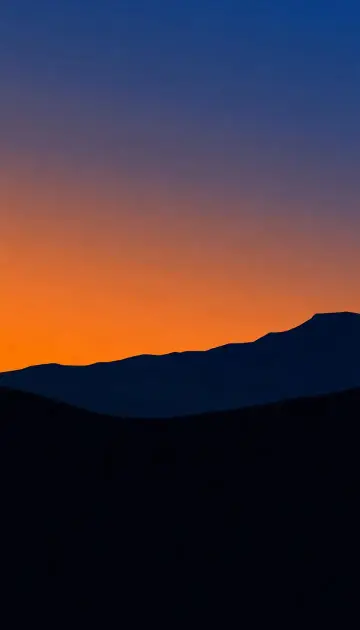
The saying "the autumn sun drops like a well bucket" comes from sunset times getting earlier day by day, plus the twilight after sunset being short in autumn too.
Sources
- 暦Wiki/日の出入りと南中/日の出入りの季節変化Japanese“Koyomi Wiki / Sunrise, Sunset, and Meridian Transit / Seasonal Changes in Sunrise and Sunset”Ephemeris Computation Office, National Astronomical Observatory of Japan
- 薄明(はくめい)(暦象年表1992より加筆、訂正)Japanese“Twilight (revised and expanded from the 1992 Ephemeris Tables)”Ephemeris Computation Office, National Astronomical Observatory of Japan
- 日の出入り@東京(東京都) 令和8年(2026)09月Japanese“Sunrise and Sunset in Tokyo (Tokyo), September 2026 (Reiwa 8)”Ephemeris Computation Office, National Astronomical Observatory of Japan
- See the year's fastest sunsets and sunrises around equinoxesBruce McClure, EarthSky, 2026
Spotted a mistake in the article or the translation? Let us know.
Report an error (contact form in Japanese, opens in a new tab)