On this page
- A closer look
- Everything left at room temperature is the same temperature
- Thermal conductivity differs between materials by three orders of magnitude
- Metals are special because of free electrons
- Air is the slowest of all
- That's why "coldness" depends on the material
- The same thing happens on the hot side
- Wood's value comes as a range
- Related reading
- What the video says
- Sources
A closer look
Everything left at room temperature is the same temperature
Let's confirm the premise first. A metal table and a wooden table that have sat in the same room for a long time are at the same temperature, because they've come into balance with the room.
But when you touch them, the metal feels cold and the wood doesn't. What you're feeling isn't temperature.
Human skin has no sensor that measures temperature. What it has are sensors that detect how fast heat is leaving. So things that pull heat out of your hand quickly feel "cold."
Thermal conductivity differs between materials by three orders of magnitude
The number that describes how fast heat travels is thermal conductivity. Material from Osaka Kyoiku University defines it:
Thermal conductivity к [W/mK] is the amount of heat that flows per second through 1 m² of a plate 1 m thick when there is a 1°C temperature difference between its two faces.
Here are some key values from a table in the same material (units: W/m·K).
| Material | Temperature | Thermal conductivity |
|---|---|---|
| Silver | 0°C | 428 |
| Copper | 0°C | 403 |
| Aluminum | 0°C | 236 |
| Iron | 0°C | 83.5 |
| Ice | 0°C | 2.2 |
| Water | 10°C | 0.582 |
| Glass | Room temperature | 0.55–0.75 |
| Dry wood | 18–25°C | 0.15–0.25 |
| Dry air | 0°C | 0.0241 |
Copper at 403 versus wood at 0.15–0.25: a difference of more than 2,000 times.
If you touch copper and wood at the same room temperature at once, the copper pulls heat out of your hand 2,000 times faster. That's why copper feels cold and wood doesn't.
Metals are special because of free electrons
Why are metals alone so fast? The Osaka Kyoiku University material explains:
Thermal conductivity increases in the order of gases, liquids, and solids. Metals have especially high thermal conductivity because, in addition to the collisions between molecules discussed under heat conduction, there are collisions between free electrons in the metal.
In ordinary materials, heat moves along as the vibration of molecules passes to their neighbors. It's like a bucket brigade.
On top of that, metals have electrons that can move freely through the crystal (free electrons). These electrons carry heat, which is overwhelmingly faster than the molecular bucket brigade.
The same free electrons are why metals conduct electricity well. The tendency that "things that conduct electricity well also conduct heat well" exists because the carriers are the same.
Air is the slowest of all
Look at the bottom of the table. Dry air is 0.0241, about a tenth of even wood.
This is the principle behind insulation. Wool sweaters are warm and thermos bottles keep things hot because they take advantage of air's extremely low thermal conductivity.
Styrofoam, down feathers, fiberglass insulation, double-pane windows: they all use the same strategy of trapping a layer of still air. It's not the material itself that insulates, but the air the material holds.
That's why "coldness" depends on the material
Compare this with your own experience, and the order lines up neatly.
Feels coldest: metal (doorknobs, spoons, horizontal bars) Next coldest: stone, tile, glass (around 0.55–1) Hardly feels cold: wood (0.15–0.25) Barely cold at all: fabric, foam materials (which hold a lot of air)
Walk barefoot on a winter morning, and a tile floor feels cold while a wooden floor doesn't feel so cold. The floors are at the same room temperature; the difference is thermal conductivity.
The same thing happens on the hot side
It works in reverse, too.
In a sauna, you can sit on the wooden bench, but you can't touch the metal parts. Both are the same temperature (80°C or 90°C). But metal pours heat into your hand all at once, so it burns you.
For the same reason, you can't hold an aluminum baking sheet straight out of the oven bare-handed, but you can hold a wooden cutting board at the same temperature.
Even at the same temperature, only the metal is dangerous. Whether hot or cold, what's at work is thermal conductivity.
Wood's value comes as a range
The wood value in the table is given as a range, "0.15–0.25," because it varies with moisture content and density.
Wood is a collection of cells, holding air gaps inside. When it absorbs water, those air gaps are replaced by water. Water's thermal conductivity is 0.582, more than 20 times that of air, so damp wood conducts heat more easily than dry wood.
That difference is why a wet wooden cutting board feels colder than a dry one. Why a wet towel feels cold is part of the same logic.
Related reading
What the video says

A metal door handle and a wooden chair in the same room. Measure them with a thermometer, and both should be 25°C, the same as the room. But when you actually touch them, doesn't the metal feel cold while the wood feels somehow warm?
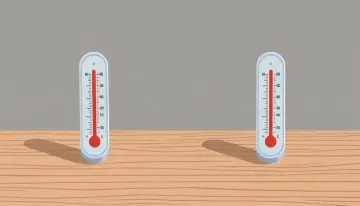
Thermometers don't lie. Things in the same space always settle at the same temperature given enough time. And yet our hands feel them as if they were at completely different temperatures. This contradiction can actually be explained by one simple law of physics.

Today's topic: why does metal feel cold and wood feel warm? The key to this mystery isn't actually the skin itself. It's the speed of heat transfer: how quickly heat escapes from your skin. Coming up, we'll dig deep, including some surprising examples from everyday life.

First, it helps to know that what our skin senses isn't absolute temperature but how fast temperature changes. There's no sensor in the skin that measures temperature itself; instead, nerves detect how quickly the temperature at the skin's surface rises or falls. So when heat is being drained away rapidly, the brain decides it's cold, and when not much heat is lost, it decides it's warm.

Because of this mechanism, things in the same 25°C room can give very different impressions the moment you touch them. So why do different materials take heat away so differently? This is where the term thermal conductivity comes in.

Thermal conductivity is a number describing how efficiently a material conducts heat. Metals have very high thermal conductivity, while wood and plastic have very low thermal conductivity. When you touch metal, the heat in your skin moves into the metal in an instant, as if it were being sucked in.
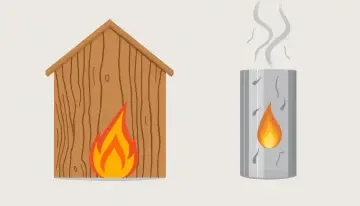
Wood, on the other hand, conducts heat slowly, so not much heat is drawn from the spot you touch. In fact, the small amount of heat passed from your skin stays at the wood's surface, keeping it close to body temperature. Even at the same room temperature, the speed at which heat is taken away is completely different, and that creates the difference in how cold or warm things feel.

By the way, the same logic explains why ice feels painfully cold when you hold it bare-handed. The ice itself isn't necessarily extremely cold, but its wet surface draws heat away very efficiently, so you feel an intense cold in an instant. So far we've seen that how easily heat travels shapes what we feel, but there's an even more familiar and surprising story still to come.

So far, that's been the basic mechanism of how easily heat escapes. But you'll be surprised to learn just how many everyday situations this phenomenon is hiding in. Winter mornings, choosing flooring, even choosing kitchen tools: they're all connected by this single law.

On a winter morning, standing barefoot on a hardwood floor gives you a chill, but the carpet in the same room doesn't feel nearly as cold. Again, the whole room is at the same temperature, but this happens because the flooring materials have different thermal conductivities. The hardwood floor keeps soaking up heat, so the warmth of your soles is drained quickly and it feels cold.

Carpet, by contrast, holds lots of air between its fibers, and this layer of air makes heat hard to conduct. So the heat from your feet doesn't escape much, and it feels warm. In fact, this mechanism of blocking heat with a layer of air is shared by the cold-weather gear all around us.

A down jacket is warm in winter not because the feathers themselves give off heat. By trapping lots of air between the fluffy down, it simply keeps your body heat from escaping. Air has very low thermal conductivity, so it works as an excellent insulator.

In other words, futons and sweaters are warm not because the fibers produce heat, but because the air trapped in the gaps between fibers blocks your body heat's escape routes. Flip that around: wet clothes feel cold right away because water pushes out that air layer, making thermal conductivity shoot up.

This difference in thermal conductivity is put to good use in choosing kitchen tools, too. Frying pans are made of copper or aluminum, which have high thermal conductivity, so that when placed over a flame they pass heat to food quickly and evenly. On the other hand, trivets and pot holders are made of cloth or wood because they conduct heat poorly, protecting your hands from the heat.

Imagine if pot holders were made of metal. Scary just to think about, right? The same single property, conducting heat or not, is used in opposite ways: in tools that cook food deliciously and in tools that protect your hands. And this one law actually leads to an even bigger surprise.

It's not unusual for a sauna to exceed 90°C, yet we can stay inside for a long time without getting burned. That's because air itself has very low thermal conductivity and a weak ability to transfer heat. The hot energy in the air reaches the body only gradually, so we can tolerate the high temperature.

But at the same 90°C, if you accidentally touch a metal handle or the heater inside the sauna, you'll get burned instantly. You're safe only because you're surrounded by air, a medium that conducts heat poorly; the moment you touch metal with its high thermal conductivity, that rule breaks down. At this point, you can see that every sense of cold and warm around us is an application of this one law.
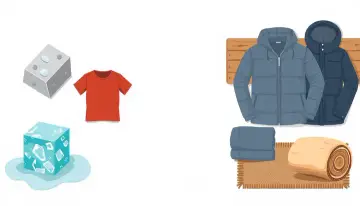
To sum it all up, what we feel as cold or warm in daily life isn't really temperature itself. It's the speed of heat flow: how fast heat is taken from our skin, or how much it stays put. Metal, ice, hardwood floors, and wet clothes all fall on the side that takes heat away quickly. Wood, carpet, down, and dry clothes all fall on the side that holds heat in.
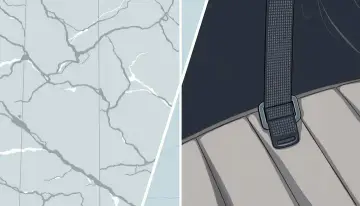
Just by adopting this point of view, you can suddenly explain all sorts of temperature mysteries around you. Why does only the metal buckle of a car seatbelt get hot in summer and cold in winter? Why does a marble floor always feel cool? The answer is the same every time: differences in thermal conductivity.

Today we started from the question of why metal feels cold and wood feels warm, and we saw that our bodies sense not temperature itself but the speed of heat flow, and that this law is applied everywhere, from down jackets to saunas to kitchen tools. The fact that things feel completely different in the same 25°C room just because the material changes isn't a mysterious phenomenon at all. It comes down to solid physics.

The next time you touch something, pay a little attention. Whether it feels cold or warm, there may be a tug-of-war between your skin and heat going on, separate from the number a thermometer shows. There must be some thermal conductivity mysteries around you that you haven't noticed yet. Please share them in the comments.
Sources
- 熱伝導率(熱の伝わる速さ)Japanese“Thermal Conductivity (How Fast Heat Travels)”Osaka Kyoiku University
Spotted a mistake in the article or the translation? Let us know.
Report an error (contact form in Japanese, opens in a new tab)