On this page
- A closer look
- A fabric's color is the color of the light that comes back
- Dry fibers scatter light
- Water shrinks the difference at the boundaries
- It's not just fabric that gets darker when wet
- Why a wet towel feels cold is a different story
- Whether water gets into the fibers depends on wettability
- It goes back when it dries
- Related reading
- What the video says
- Sources
A closer look
A fabric's color is the color of the light that comes back
First, let's review how we see color in objects. Here's an explanation from Toho University:
In the colored paper example above, the paper itself contains a red pigment (which reflects red) or a yellow pigment (which reflects red and green light).
Pigments reflect light of certain colors and absorb the rest. A red cloth sends back red and absorbs the other colors.
However, the light that comes back is of two kinds:
- Light returned by the pigment (carries information about the fabric's color)
- Light scattered at the surface (carries no color information; whitish light)
When there's a lot of the second kind, the color looks pale, because whitish light is mixed in.
Dry fibers scatter light
Look at a towel under a microscope and you'll see countless thin fibers tangled together. Between the fibers is air.
When light enters a fiber, it goes from air (refractive index about 1.0) into the fiber (refractive index about 1.5), so some of it reflects at the boundary. When it leaves the fiber, it reflects at a boundary again.
Because there are countless such boundaries, light reflects and refracts over and over, scattering in every direction. This is diffuse reflection.
Toho University's explanation also touches on how scattering affects the way colors look:
Structural color can be described as color produced by the interference, diffraction, and scattering of light.
A dry towel looks whitish and bright because so much light comes back through this diffuse reflection. It scatters near the surface and returns before it can travel deep into the fibers and hit the pigment.
Water shrinks the difference at the boundaries
Here's the key point.
Water's refractive index is about 1.33. Fiber's is about 1.5.
Fiber–air boundary: 1.0 → 1.5 (big difference) Fiber–water boundary: 1.33 → 1.5 (small difference)
The smaller the difference in refractive index, the weaker the reflection at the boundary. So when water gets in, diffuse reflection drops sharply.
With less light scattering back, light travels deep into the fibers. There it meets the pigment, more light gets absorbed, and only the color the pigment selects comes back.
The result: less whitish light, so the color looks darker.
It's not just fabric that gets darker when wet
The same thing happens with anything porous.
- Asphalt: turns black when wet with rain
- Sand: sand at the water's edge is darker than dry sand
- Wood: gets darker when you pour water on it
- Paper: becomes see-through and looks darker when it gets wet
- Stone: wet stones show their patterns more clearly
All of these follow the same logic: "water fills tiny bumps and gaps in the surface, reducing diffuse reflection."
Because wetting a stone makes its patterns look beautiful, people sometimes splash water on mineral specimens to examine them. Applying oil instead of water has the same effect, because oil's refractive index is also closer to that of fiber or stone than air's is.
Why a wet towel feels cold is a different story
While we're at it, let's touch on another property of wet towels.
Wet towels feel cold. That's for a different reason than the color.
Dry air has a thermal conductivity of 0.0241 W/m·K, while water's is 0.582. That's a 24-fold difference. When the air in the gaps between fibers is replaced by water, the towel conducts heat 24 times more easily.
On top of that, water absorbs heat as it evaporates (heat of vaporization), so it feels cold on two counts.
A wool sweater stops being warm when it gets wet for the same reason. Getting wet costs you both "visual brightness" and "insulation."
Whether water gets into the fibers depends on wettability
How wet something gets depends on the properties of the fiber. Here's an explanation from Toyo University:
Changes in the shape of a water droplet are expressed by the "contact angle." The contact angle is the angle formed between the surface of a droplet and the surface of a solid where the droplet touches it. Water-repellent (hydrophobic) surfaces have a large contact angle, while surfaces where water spreads out (hydrophilic) have a small contact angle.
Cotton is highly hydrophilic, so water seeps into the gaps between its fibers. That's why its color changes so much.
Water-repellent fabric makes water bead up on the surface. Since the water doesn't get into the gaps, the color barely changes. Rain gear doesn't change color when wet because the water isn't getting inside the fibers.
Whether the color changes tells you whether the fabric is actually wet or the water is just sitting on top. It's a handy little way to tell.
It goes back when it dries
Once the water evaporates and air returns to the gaps between the fibers, the diffuse reflection returns too, and the color goes back to its original brightness.
So the color change from getting wet is completely reversible. The dye hasn't washed out, and the fibers haven't changed. The way light scatters has just changed temporarily.
Related reading
What the video says

On rainy days, when your clothes or towel get wet, the color can suddenly look much darker, right?
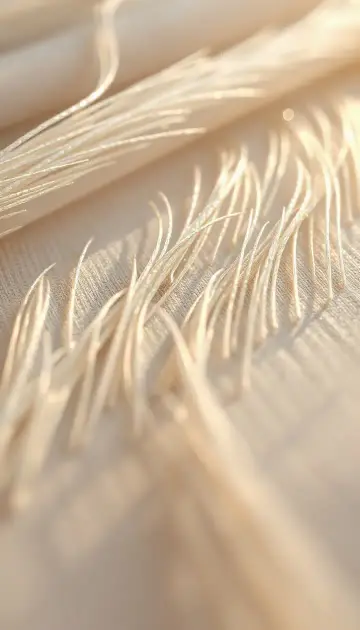
It actually comes down to the bumpy surface of the fabric. A dry fabric has lots of tiny fibers sticking out, and light bounces off them in all directions.

When light scatters every which way, the fabric looks whitish and bright, and the color seems pale.
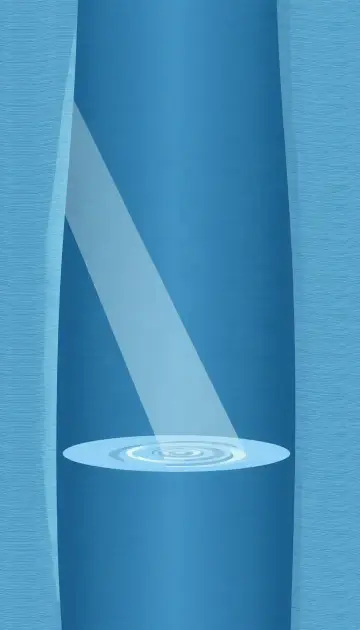
But when water soaks in, it fills the gaps between the fibers and the surface becomes smoother. Then light travels straight deep into the fabric and comes back out as color.

In other words, getting wet reduces scattered reflection, so the fabric's true color shows up darker and clearer.
Sources
- 青い魚はなぜ青い-魚の体色変化の不思議を探る-(光の反射・散乱と色)Japanese“Why Are Blue Fish Blue? Exploring the Mysteries of Color Change in Fish (Reflection and Scattering of Light and Color)”Toho University Virtual Laboratory
- 表面張力と濡れ性Japanese“Surface Tension and Wettability”Toyo University
Spotted a mistake in the article or the translation? Let us know.
Report an error (contact form in Japanese, opens in a new tab)