On this page
A closer look
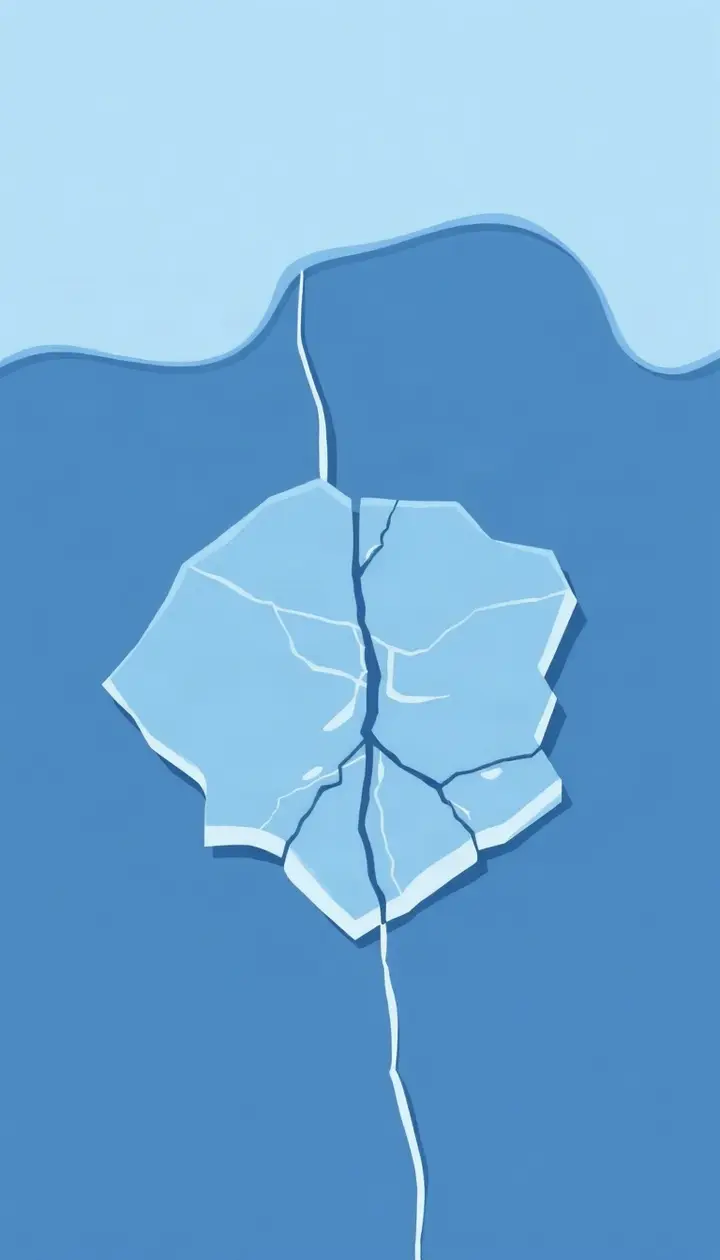
Ice can disappear without ever becoming liquid
Even below 0°C (32°F), water molecules are breaking away from the surface of ice. When something goes directly from a solid to a gas, it's called sublimation.
The amount is far smaller than with evaporation from liquid water, but it isn't zero. So ice keeps shrinking even though it never melts.
The ice in your freezer gets smaller, yet no water collects in the tray. That's the proof it isn't melting. It never passes through the water stage.
The same phenomenon is how frozen laundry dries, and why dry ice vanishes while giving off vapor.
Freezer air is surprisingly dry
For sublimation to happen, the vapor leaving the ice needs somewhere to go.
Let's start with a definition from the Japan Meteorological Agency:
Dew point temperature: The temperature at which relative humidity reaches 100% when air is cooled while its water vapor pressure is held constant.
The lower the temperature, the less water vapor air can hold. The absolute amount of water vapor that air at −18°C (about 0°F) in a freezer can hold is tiny.
But it doesn't stop there. The freezer actively removes even that small amount of vapor.
This is defrosting, or more precisely frost removal. The freezer's cooling coil (the evaporator) is the coldest part inside, so water vapor turns into frost and sticks to it. In fan-forced freezers that circulate air with a fan, vapor gets pulled out every time the air passes over the coil.
As a result, the air inside ends up even drier than the maximum that −18°C air could hold. There's essentially unlimited room to take in the vapor coming off the ice.
The fan carries the vapor away
The other factor is air movement.
If water vapor just stayed around the ice, the amount leaving and the amount returning would balance out, and the ice would stop shrinking. But the freezer's fan keeps the air inside circulating.
Vapor leaving the ice's surface rides the airflow from the fan, reaches the cooling coil, and gets trapped there as frost. The ice is always surrounded by dry air.
It's the same setup as laundry drying faster on windy days. Drying requires not only releasing moisture but also carrying it away, and the fan does that job.
That's why ice shrinks more easily in a fan-forced freezer (modern freezers that circulate air with a fan) than in a direct-cooling freezer (older freezers without a fan). The convenience of never having to defrost and the shrinking ice both come from the same mechanism.
Where does the lost vapor go?
The vapor leaving the freezer air ends up as frost on the cooling coil.
In other words, while the ice is shrinking, an equal amount of frost is growing on the coil. The ice's water is moving across the freezer and relocating to the coil.
Refrigerators with automatic defrost periodically warm up the coil to melt this frost and drain it away as water. That's why there's a drip pan at the back or bottom of the fridge.
The water from your freezer ice ultimately gets dumped outside the fridge. Quite a long journey.
Why ice turns cloudy white
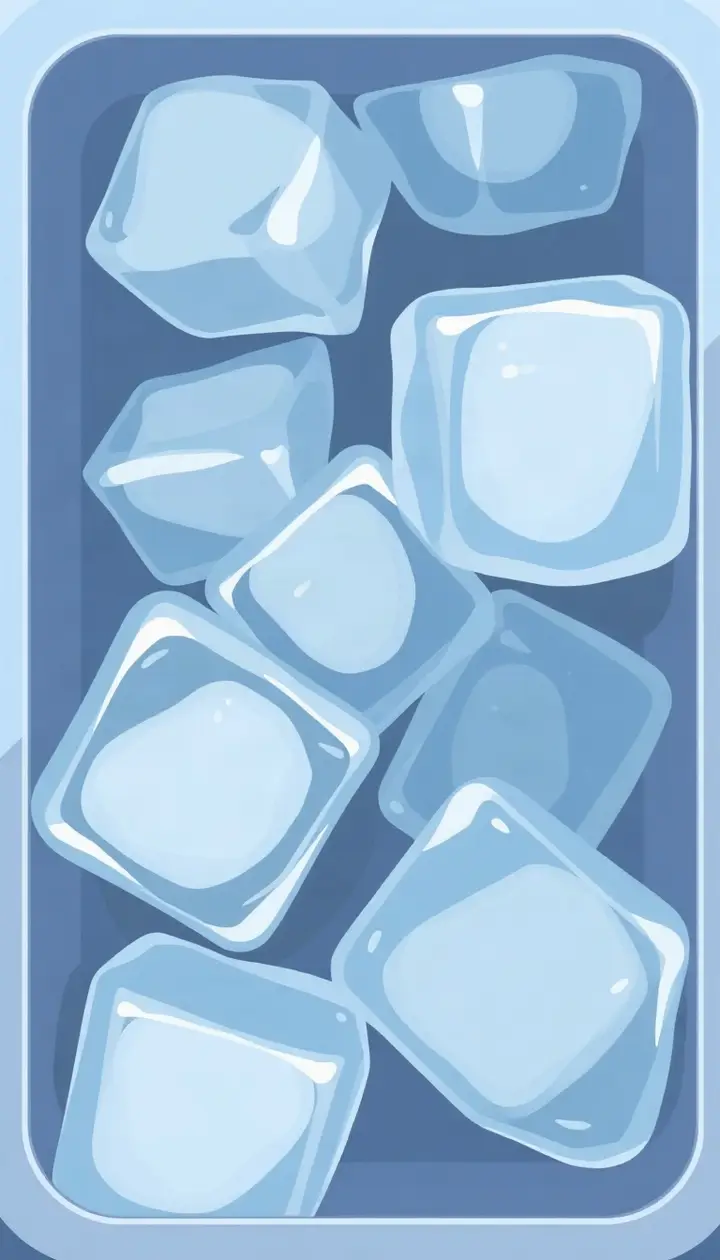
Old ice gets a whitish surface and rounded corners.
It shrinks from the corners. Corners and edges have more exposed surface relative to their size than flat faces do. So sublimation happens faster there, and the corners round off. It's just like how weathered stones become rounded.
The surface gets rough. Sublimation doesn't happen evenly, so tiny bumps and pits form on the surface. These scatter light in all directions, making the ice look white.
That's why old ice becomes "small lumps with rounded corners and a frosted-glass surface."
It picks up odors, too
The same air circulation carries another problem along with it.
Odor molecules from food in the freezer ride the fan's airflow around the compartment. Then they stick to the surface of the ice.
That's why old ice tastes and smells like the freezer. While the ice is losing water vapor, it's picking up odors at the same time.
Odors transferring in the fridge happens in the freezer too, and an explainer from Tokai Coop (a Japanese consumer co-op) warns, "Freezers are also used to store food for long periods, so odors can transfer."
The fix: cover it
If you don't want your ice to shrink, block the vapor's escape route.
- Use an ice tray with a lid
- Put finished ice in a storage bag and seal it
- Make only as much as you'll use instead of stockpiling
Inside a bag, the air quickly becomes saturated with water vapor, and sublimation stops. It also keeps out odors.
By the way, freeze-drying uses this same sublimation on an industrial scale. Food is kept frozen and placed in a vacuum so the ice sublimates. It's a sped-up version of what happens in your freezer.
Related reads
What the video says
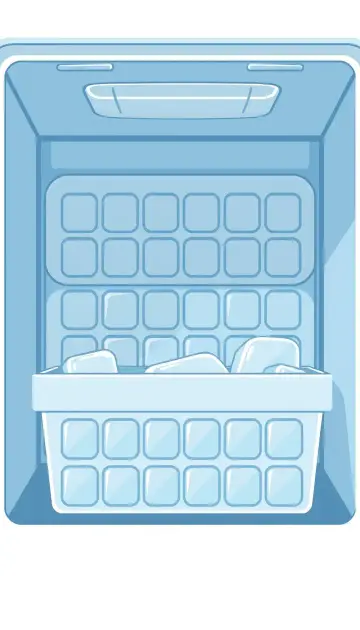
Have you ever noticed that ice left sitting in the freezer has gotten smaller, or turned cloudy white?

Actually, the ice isn't melting. It's a phenomenon called "sublimation."

The solid ice skips the liquid stage entirely and escapes into the air directly as water vapor, a gas.
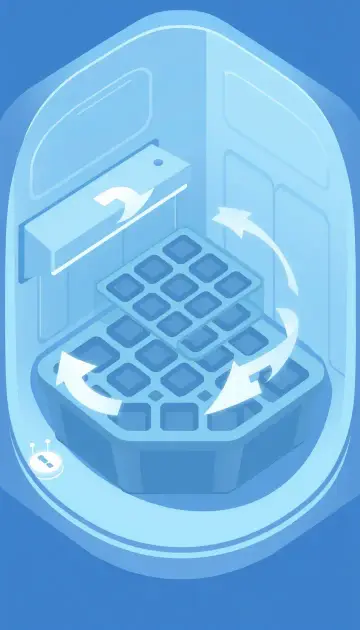
The inside of a freezer is dry, and the air inside is constantly circulating, so sublimation slowly but steadily takes place.

That's why ice left for a long time shrinks, or its surface ends up looking frosty and white.
Sources
- 氷、霜、霧、雷、日照時間(予報用語)Japanese“Ice, Frost, Fog, Thunder, Sunshine Duration (Forecast Terminology)”Japan Meteorological Agency
- 気温、湿度に関する用語(予報用語)Japanese“Terms Related to Temperature and Humidity (Forecast Terminology)”Japan Meteorological Agency
Spotted a mistake in the article or the translation? Let us know.
Report an error (contact form in Japanese, opens in a new tab)