On this page
A closer look
The white is made of tiny "bubbles"
Look closely at the white part of an ice cube and you'll see lots of very fine bubbles packed together. A study published in the American science journal PNAS (2025) explains that ice made from water with air dissolved in it contains many bubbles, so it usually ends up opaque rather than transparent. The ice cubes in your freezer are a perfect example.
When there are bubbles, light gets bent and bounced around at their edges again and again, so it can't pass straight through. Just as frosted glass or water full of fine bubbles looks whitish, the parts of the ice where bubbles cluster look white too.
The air starts out "dissolved," not as "bubbles"
The video said that "tap water has tiny air bubbles, too small to see, dissolved in it," but strictly speaking, there aren't bubbles in the water before it freezes. Air (mainly oxygen and nitrogen) is dissolved as individual molecules scattered through the water, the same way sugar dissolves in water. The bubbles form partway through freezing.
According to the PNAS study, gases dissolve in liquid water but hardly dissolve in ice at all. So when water freezes, the dissolved air is pushed out of the ice and builds up in the water that hasn't frozen yet. Bubbles then form near the boundary between ice and water (the freezing front) and get trapped in the ice as it grows.
A study from Nagaoka University of Technology (2025) also confirmed that as ice grows, the air (dissolved gas) in the remaining water becomes more concentrated, and once it reaches the maximum amount that can stay dissolved (saturation), bubbles start to appear.
It freezes from the outside, so the air gathers in the middle
In an ice cube tray, the top surface exposed to cold air and the sides and bottom touching the tray freeze first, leaving the middle for last. An explanation from the Chiba Prefectural Waterworks Bureau likewise says that tap water freezes gradually from the outside, and the dissolved air and minerals get collected in the center, which is why the center of the ice turns white. The video's explanation of this part is accurate.
Minerals (such as calcium, magnesium, and silicic acid) gather in the middle the same way. According to an explanation about tap water from Kagoshima City, these are normally dissolved in the water, but once frozen they can change into substances that don't dissolve easily, and they may show up as white floating particles after the ice melts. They're components that were originally in the tap water.
That said, the main cause of the "whiteness" while the ice is frozen is thought to be the bubbles rather than the minerals. The video summed it up as "the air and minerals get packed in tight. That's what you're seeing as white," but it's better to think of it as the white appearance coming mainly from tiny bubbles.
To make clear ice, freeze it "from one direction"
The video said that "if you freeze it slowly over a long time, or use water you've boiled first, the air escapes and you get crystal-clear ice." The idea is right, but it needs a little more explanation.
First, the clear ice sold in stores isn't made just by freezing it slowly. According to materials by Seiji Kamimura of Nagaoka University of Technology, the "ice can method" used to make block ice freezes water over 48 to 72 hours while stirring it with air, and even then, the core that freezes last is hard to get clear, so the highly transparent parts are what get used. Natural ice, frozen in ponds over 10 to 14 days in winter, is also known for its high clarity (the same materials note that it can sometimes contain large bubbles). The Chiba Prefectural Waterworks Bureau also explains that store-bought ice and commercial ice machines use techniques such as removing the opaque part in the center.
A food scientist at the University of Southern Queensland in Australia recommends "directional freezing" at home. If you insulate the sides of the container so it freezes only from the top, the air and minerals get pushed further and further down, and the white part collects near the bottom, which freezes last. Remove that part, and the rest can be used as clear ice.
Water that's been boiled once has less dissolved air, so it can be expected to delay the point at which bubbles start to form. The Nagaoka University of Technology study also created a formula that predicts where bubbles will start to appear based on the amount of gas initially dissolved in the water, and confirmed it experimentally. However, the University of Southern Queensland food scientist points out that even if you boil the water, the ice will still turn cloudy if it's freezing from all sides. The key to clear ice is making it freeze in one direction.
Also, be careful when filling a refrigerator's automatic ice maker. Mitsubishi Electric recommends using chlorinated tap water for some models, to help prevent mold and slime. If you use boiled water or filtered water in an automatic ice maker, check the instruction manual and clean it regularly.
You might also like
What the video says
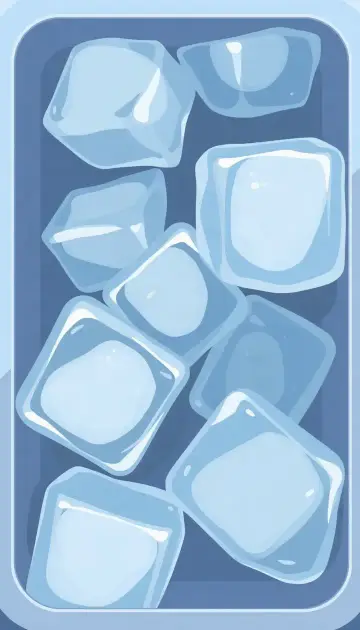
When you make ice in an ice cube tray, the middle sometimes turns cloudy white, right? That's actually caused by something that was hiding in the water.
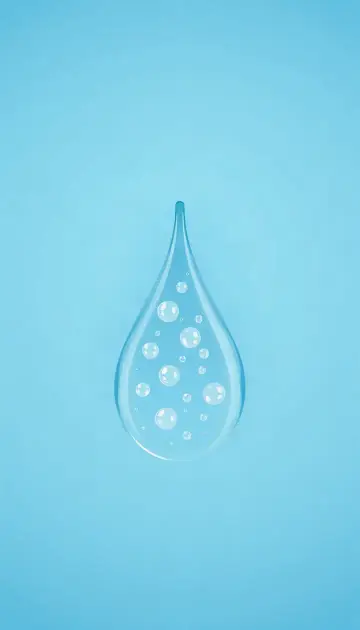
Tap water has tiny air bubbles, too small to see, and minerals dissolved in it.
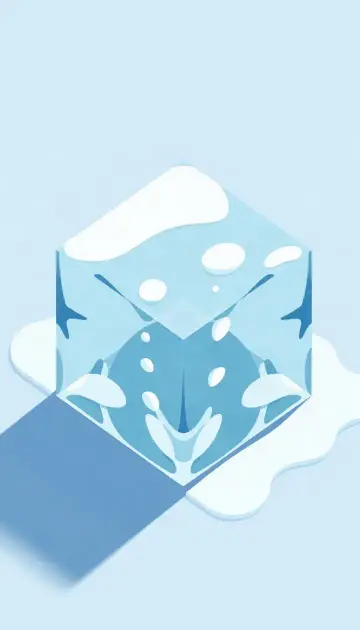
Ice freezes from the outside toward the center. As it does, the air and minerals get pushed out of the frozen part and gather in the middle, which hasn't frozen yet.
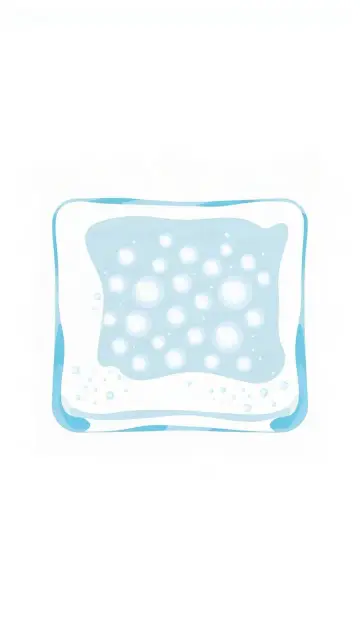
When the middle finally freezes solid, the air and minerals get packed in tight. That's what you're seeing as white.
If you want clear ice, try freezing it slowly over a long time, or use water you've boiled first. The air escapes, and you get crystal-clear ice.
Sources
- 水道水を使っている時に、ちょっと気になる「白いもの」の正体ってなに?Japanese“What is that slightly worrying "white stuff" you sometimes notice when using tap water?”Chiba Prefectural Waterworks Bureau
- 冷蔵庫で作った氷が溶けるとなかに白い浮遊物が出てくるのはなぜですか。Japanese“Why do white floating particles appear when ice made in the refrigerator melts?”Kagoshima City
- On the shape of air bubbles trapped in iceThiévenaz V. et al., PNAS, 2025
- 放射冷却による製氷過程の観察 第2報:気泡列の発生原理と抑制策検討Japanese“Observation of the ice-making process by radiative cooling, Part 2: Formation mechanism of bubble columns and study of suppression measures”Kamimura S. et al., Seppyo (Japanese Society of Snow and Ice), 2025
- 美しく融けにくく飲料の味を変えない氷の製法Japanese“A method for making beautiful, slow-melting ice that doesn't change the taste of drinks”Kamimura S. (Nagaoka University of Technology), JST New Technology Presentation Meetings, 2021
- How do I make clear ice at home? A food scientist shares easy tipsBurey P., University of Southern Queensland, 2026
- 冷蔵庫の自動製氷にミネラルウォーターや浄水器の水は使用できる?Japanese“Can mineral water or filtered water be used in a refrigerator's automatic ice maker?”Mitsubishi Electric
Spotted a mistake in the article or the translation? Let us know.
Report an error (contact form in Japanese, opens in a new tab)