On this page
- A closer look
- 1. The hat trick was a cricket hat
- 2. Stoppage time isn't a rough guess
- 3. The goal net was born to end arguments
- 4. The corner flag is equipment you can't pull out
- 5. With VAR, a computer draws the offside line
- 6. The real World Cup trophy is in Zurich
- 7. Number 10 became the ace's number later on
- What you see when you line up all seven
- You might also like
- What the video says
- Sources
A closer look
1. The hat trick was a cricket hat
The Japan Football Association's Q&A explains the origin like this:
There are various theories about the origin, but it is said to come from cricket, a sport that originated in England.
In cricket, a hat was presented for the feat of getting three batters out in a row.
Getting three batters out in a row is said to be even harder than in baseball, and hats came to be presented to honor the players who achieved this feat.
The idea of "a hat for three feats" carried over into soccer. The fact that six goals is called a double and nine goals a triple is also a holdover from this way of counting in units of three.
→ For more, see Why Is It Called a "Hat Trick"? The Surprising Origin
2. Stoppage time isn't a rough guess
That number shown near the end of a match is calculated by the referee, working with the fourth official, by adding up the time play was stopped. Injury treatment, stoppages after goals, time taken for substitutions—each one gets added together.
The final decision rests with the referee alone. That's why the number shown can differ even when matches play out similarly.
→ For more, see Did You Know Stoppage Time Is Actually Calculated "Down to the Second"?
3. The goal net was born to end arguments
In the 19th century, soccer goals had only posts and a crossbar. Neither the referee nor the crowd could tell whether the ball had passed inside the frame or gone wide. Arguments broke out almost every game.
In 1891, the net was invented, and the ball could now be physically stopped. It was an invention for making calls, not for looks.
→ For more, see The Surprising Reason Soccer Goal Nets Were Invented
4. The corner flag is equipment you can't pull out
Here's the text of Law 1 of the Laws of the Game:
A flagpost, at least 1.5 m (5 ft) high, with a non-pointed top and a flag must be placed at each corner.
"Must be placed"—it has to be placed at each corner. Like the goalposts, it's specified as equipment required to play the match.
What's more, the corner arc is drawn using this flagpost as its reference point.
The corner area is defined by a quarter circle with a radius of 1 m (1 yd) from each corner flagpost drawn inside the field of play.
The flag is the reference point for that 1 m radius. Pull it out, and the basis for determining the position disappears.
→ For more, see Did You Know Pulling Out the Corner Flag During a Match Is an Offense?
5. With VAR, a computer draws the offside line
Dedicated cameras installed around the stadium record the positions of players' bodies at high frequency and convert them into skeletal line data. The offside line isn't based on the referee's eyes; it's a virtual line drawn by a computer from that data.
However, VAR only corrects "clear and obvious errors." On close calls, the original decision stands. This design is why refereeing mistakes never drop to zero.
→ For more, see How Can VAR Spot Offside Down to the Centimeter? How It Works and Why Haven't Refereeing Mistakes Completely Disappeared Even After VAR?
6. The real World Cup trophy is in Zurich
Here's the announcement from the FIFA Museum:
The FIFA World Cup™ Original Trophy is back on display in our iconic FIFA World Cup™ Gallery at the FIFA Museum in Zurich, Switzerland – now featuring an updated base plate.
The real trophy is on display at the FIFA Museum in Zurich, Switzerland. The names of every winning country since 1974 are engraved on its base, and a new base plate is made for each tournament.
The name of 2026 FIFA World Cup™ winners Spain has been added to the existing engravings, joining all previous champions since 1974, when the FIFA World Cup Trophy was first used.
Since it's an object that keeps a running record of history, the winning country can't take it home. Its predecessor, the Jules Rimet Trophy, was awarded permanently to Brazil after it won three times, and it was later stolen and never recovered.
→ For more, see Why Can't the Winners Take the World Cup Trophy Home?
7. Number 10 became the ace's number later on
Shirt numbers were originally just assigned mechanically by position. Number 10 wasn't special.
The leading theory is that in the formations of the time, it was close to the center of the attack, and as one player with outstanding skill after another wore it, its meaning built up over time.
→ For more, see Why Did the Number 10 Shirt Become "the Mark of the Ace" in Soccer?
What you see when you line up all seven
The origins of words (hat trick, number 10), systems for fairness (net, flag, VAR, stoppage time), and an agreement for preservation (the trophy).
Four of these are measures to "make sure everyone reaches the same answer." The net makes it visible whether the ball went in, the flag shows the reference point for position in three dimensions, VAR makes up for the limits of the human eye, and stoppage time turns stopped time into a number.
The other three are things that history gave meaning to after the fact: the cricket hat, the position numbers, and the lesson of the lost original trophy.
Rules are designed, and words build up over time. The mix of these two may be part of what makes watching soccer so enjoyable.
You might also like
What the video says

Three goals in one game: the famous "hat trick." Every soccer fan knows the term, but would it surprise you to hear that it didn't actually start in soccer? Today, we're taking a close look at seven soccer trivia facts, including that surprising one, organized into three themes.

This is Part 2, following our previous video, and we've split it into three chapters: where words and numbers come from, the systems that protect rules and fairness, and stories from behind the scenes. Behind the things we usually see without a second thought, there's a real reason for each one. So let's jump right into the first theme.

First up, the origin of "hat trick," one of soccer's most iconic terms. It means scoring three goals in a single game, but the term actually comes from cricket, not soccer. It's based on a custom that started in 19th-century English cricket.

Back then in cricket, when a bowler pulled off the remarkable feat of getting three outs on three consecutive balls, the club would celebrate by presenting them with an actual hat. This idea of "a hat for an amazing feat" eventually spread to other sports. In soccer, the name came to be used as-is for scoring three goals in one game, an achievement just as hard to pull off.

Next, the "stoppage time" shown near the end of a match. That number isn't just a rough guess. The referee works with the fourth official on the sideline to add up the time lost during the game, second by second.

Time spent treating a player who went down, time the game stopped for goal celebrations, time taken for substitutions. All of that stopped time gets added together to set the number. Under the rules, the final say on how long it lasts rests with the referee alone, which is why matches that play out similarly can still end up with very different amounts of stoppage time.

So we've seen that both words and numbers have real reasons behind them. Next, let's turn to the rules and systems that keep things fair on the pitch. This is really the heart of today's roundup.

Soccer has quite a few systems that were created to make fair calls. Let's start with where the goal net came from. In the 19th century, soccer goals actually had only posts and a crossbar, with no net at all.

Without a net, neither the referee nor the crowd could tell whether the ball had gone in or gone wide, and arguments broke out almost every game. To solve this, an engineer came up with the net in 1891. The goal net wasn't created for looks; it was created for "fair calls that anyone can see."

Next, the corner flag. Did you know the rules actually prohibit removing this flag during a match? If a player or coach pulls it out on their own, it's treated as an offense.

The reason is that this flag is the only marker showing where the lines are. Pull it out, and it becomes impossible to judge the exact spot for a corner kick or whether the ball went over the line. The International Football Association Board's rulebook clearly states that corner flags must be at least 1.5 meters tall and must not be moved during the match.

Finally, how VAR works. At its core, VAR is a set of dedicated cameras installed around the stadium, up to more than 20 of them. These cameras record the positions of players' bodies hundreds of times per second and convert them into skeleton-like line data.

That means offside calls come from a virtual line drawn by a computer, not from the referee's eyes. Objective data can catch differences down to the millimeter that the human eye can't judge. The rules, the flags, the cameras: they all exist to protect fairness.

So far we've talked about words and rules, but in the final chapter, we'll share two lesser-known behind-the-scenes stories. First, the World Cup trophy. That trophy the winning team lifts and takes home? It's actually not the real one.

What players actually hold is a finely crafted replica. The real trophy is returned to the organizing body right after the tournament and kept under tight security in a vault-like place. The reason is simple: the trophy itself is an extremely valuable one-of-a-kind item. It's essentially a safety measure to prevent damage or loss.
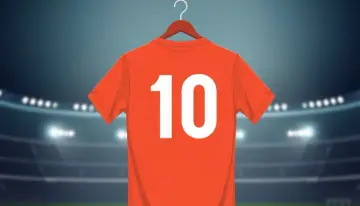
Next up, the number 10 shirt. Today it's known as "the mark of the ace," but originally it didn't carry any special meaning.

Shirt numbers were originally just assigned mechanically by position. The leading theory is that in the formations of the time, number 10 was close to the center of the attack. Then, one player with outstanding skill after another wore the number and created legends, and the culture of "number 10 is the ace" took root around the world. That said, we should add that there are various theories about its origin.

We've now looked at seven soccer trivia facts across three themes: where words and numbers come from, the systems that protect rules and fairness, and stories from behind the scenes. "Hat trick" comes from cricket, stoppage time is calculated second by second, and the goal net was born for fair calls.
Why the corner flag can't be moved, how VAR can make calls down to the millimeter, the fact that the winners' trophy is actually a replica, and the history behind the number 10 shirt. Every one of these is the kind of thing that makes your next match just a little more fun to watch, simply by knowing it.

Next time you watch soccer, be sure to pay attention to what's going on behind the scenes, too. You'll probably enjoy the match from a slightly different perspective than usual. So, of today's seven facts, which one surprised you the most?

Let us know in the comments. Once again, we've rounded up trivia that makes watching soccer a little more fun. Next time, we'll dig into another hidden "why?" from everyday life with a different theme.
Sources
- ハットトリックの語源は?/アディショナルタイムはどうやって決まるの?(ドキュメント・FAQ)Japanese“What is the origin of "hat trick"? / How is stoppage time determined? (Documents & FAQ)”Japan Football Association
- Laws of the Game – Law 1, The Field of PlayThe International Football Association Board (IFAB)
- FIFA World Cup™ Original Trophy back on display in ZurichFIFA Museum
- サッカー競技規則 2026/27Japanese“Laws of the Game 2026/27 (Japanese edition)”Japan Football Association
Spotted a mistake in the article or the translation? Let us know.
Report an error (contact form in Japanese, opens in a new tab)