On this page
A closer look
Originally a cricket term
The Japan Football Association's Q&A starts by explaining what the term covers.
It is a term used in soccer, ice hockey, and other sports. When the same player scores three goals in one game, it is called a "hat trick"; six goals is a "double hat trick," and nine goals is a "triple hat trick."
Six goals makes it a double, nine a triple. The names follow multiples of three.
Then comes the origin.
There are various theories about the origin, but it is said to come from cricket, a sport that began in England.
It's to the JFA's credit that it opens with "there are various theories." With that caveat, it goes on to explain the leading theory.
Three outs in a row is harder than in baseball
The explanation begins with the rules of cricket.
Cricket is the sport that baseball grew out of. The pitcher (bowler) tries to hit a target called the wicket, made of posts and crossbars, with the ball, while the batter (batsman) hits the ball back to protect it. If the crossbars of the wicket are knocked off, the batter is out.
The bowler aims at the wicket, and the batter defends it. Knock the target down, and it's an out.
Getting three batters out in a row is said to be even harder than in baseball, so hats came to be presented to players who achieved it, in honor of the feat.
This is the origin of the word: a hat was presented in honor of the feat.
Dictionaries say the same thing. The Seisen-ban Nihon Kokugo Daijiten (a major Japanese dictionary, available on Kotobank, a Japanese online dictionary site) puts it this way:
Originally a cricket term, meaning to get three batters out consecutively with three balls. The name comes from the practice of giving a hat (as a reward) for it.
The phrase "with three balls" is interesting. Some descriptions say it meant not just three batters in a row, but taking them out on three consecutive balls.
The move to soccer
This came to be used in soccer as well, and scoring three goals in one game came to be called a hat trick.
Only the framework of "an amazing feat involving the number three" survived; the contents changed. In cricket, it was three outs; in soccer, it's three goals.
The same transplant happened in ice hockey and rugby too. Here's Kotobank's entry:
In soccer and ice hockey, when one player scores three or more goals in a single game.
In rugby, it means scoring three or more tries in one game. The "three-time feat" template spread across sports.
Another theory
The JFA also lists a second theory.
It is also said that spectators throwing their hats onto the field to honor a player's achievement was the origin of "hat trick."
Did clubs give hats, or did spectators throw them? Which came first hasn't been settled.
In ice hockey, fans actually do throw hats onto the rink when a player scores a hat trick. Seeing that, the second theory might seem natural, but it's also possible that the custom itself arose after the word.
What "trick" means
The second half of the word is interesting to think about, too.
Here, "trick" doesn't mean "deception" but rather "an amazing feat" or "a display of skill." It's the same "trick" as in "magic trick," closer in nuance to "a skill."
So taken literally, "hat trick" means "a hat-worthy skill": a shortened way of saying a feat good enough to earn you a hat.
By the way, English dictionaries vary on the year the term was first recorded. The Japanese dictionaries on Kotobank agree on the basic framework of a cricket origin, but they don't give a specific year or name the first person to achieve it. A widely circulated story says it started with a match in England in 1858, but neither the JFA nor Kotobank mentions that year.
Word origins often leave parts like this, "widely believed, but hard to trace to primary sources." What's certain is the basic framework: there was a custom of giving hats in cricket, and the term then moved into other sports as a word for a feat of three.
Related reads
What the video says

When a player scores three goals in one game, we call it a "hat trick," right? But the term didn't start in soccer. It actually came from cricket.

In 19th-century England, cricket clubs reportedly had a custom of giving a real hat as a keepsake to a bowler who took outs on three consecutive balls.
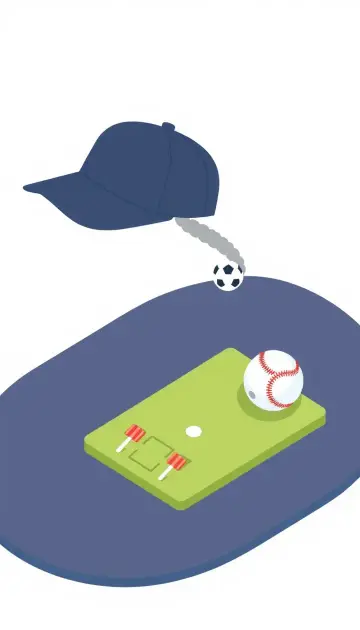
This idea of "pull off an amazing feat, get a hat" eventually spread to other sports.

And in soccer, the same name was carried over for an equally tough achievement: scoring three goals in one game.

Even the words we use every day can hide some surprising roots.
Sources
- ハットトリックの語源は?(ドキュメント・FAQ)Japanese“What is the origin of "hat trick"? (Documents / FAQ)”Japan Football Association
- ハットトリック(精選版 日本国語大辞典・デジタル大辞泉)Japanese“Hat trick (Seisen-ban Nihon Kokugo Daijiten / Digital Daijisen)”Kotobank
Spotted a mistake in the article or the translation? Let us know.
Report an error (contact form in Japanese, opens in a new tab)