On this page
A closer look
Mochi has water inside
The starting point is moisture content. A document from Japan's Ministry of Agriculture, Forestry and Fisheries gives the moisture levels of raw rice and cooked rice.
We Japanese routinely add water to uruchi rice (ordinary non-glutinous rice, about 15% moisture) and heat it to make cooked rice with about 60–65% moisture; this process is called rice cooking.
Mochi is made by steaming glutinous (sticky) rice and pounding it, and it's around 40% water. It may look firm, but nearly half of it is water.
This water is the fuel for the puffing.
Steam expands 1,700 times
When water turns into steam, its volume grows by about 1,700 times.
Even the small amount of water in mochi takes up an enormous volume once it becomes steam. That expansion is happening inside the mochi.
But expansion alone won't make it puff up. If there's an escape route, the steam just leaves.
The surface hardens first and becomes a lid
This is the key.
When you toast mochi, the surface heats up first. The surface moisture evaporates, the starch changes, and a hard layer forms. That's the part that turns golden brown.
This layer becomes a lid that steam has a hard time getting through.
Inside, the steam keeps building, while the outside is sealed by a hard skin. The pressure rises and pushes on the skin from within. Because mochi is soft, it stretches and puffs up like a balloon.
The condition is that two things happen at the same time: "the outside hardens first" and "gas builds up inside."
The starch also needs to be soft
To puff up, the mochi has to be in a stretchy state.
The starch in mochi gelatinizes with heat and water. "Microscopic and Macroscopic Observations of State Changes Accompanying Gelatinization in Starch Granule–Water Systems," a study in the Journal of Cookery Science of Japan, tracked this change down to the microscopic level.
Gelatinized starch is sticky and stretchy. That's why it can stretch under the pressure of the steam.
On the other hand, if you suddenly heat mochi that has cooled and hardened (retrograded starch), it can crack before it gets a chance to stretch. Heating it slowly so it gelatinizes all the way through helps it puff up nicely.
It tears at the skin's weak spots
As it keeps swelling, the skin eventually reaches its limit somewhere.
The spots most likely to tear are:
- Areas with scratches or cracks on the surface
- Thin areas
- Areas that have charred and become brittle
The moment it tears, the steam inside gushes out all at once, and the mochi inside gets pushed out with it. That's why mochi looks like it "explodes."
The mochi that bursts out still contains moisture, so it's soft and stretchy. That's why toasted mochi ends up with a cracked surface and white mochi oozing out from inside.
Why kirimochi has cuts in it
Some store-bought kirimochi (pre-cut blocks of mochi) come with cross-shaped or grid-shaped slits.
This is a trick for deciding where it will tear. With slits in place, the pressure escapes there. Instead of bursting out in random spots, it splits neatly.
By the same logic, if you make shallow cuts in the surface at home before toasting, the mochi keeps its shape as it cooks.
On the flip side, if you toast it in a toaster oven without any cuts, it can swell in unexpected directions and touch the rack or the heating element.
A microwave gives a different result
If you heat mochi in a microwave, it doesn't puff up the way it does on a grill.
A microwave heats the whole thing from the inside, so there's no stage where just the surface dries and hardens first. With no lid, the steam escapes through the surface.
As a result, instead of puffing up, the whole thing turns soft and almost melty.
The shape of toasted mochi comes from the order of heating: "harden the surface first." A microwave can't create that order, so you don't get the same shape.
Freshly baked bread being crispy outside and fluffy inside comes from the same structure, where temperature and moisture split between the surface and the inside. What happens in an oven and what happens on a mochi grill are very similar.
Popcorn works the same way
Some other foods puff up through the same mechanism.
Popcorn. The water inside a corn kernel turns into steam, and the hard hull can't hold it in and bursts. At the moment it bursts, the starch inside expands all at once and sets.
Bread and cake. These use not only steam but also carbon dioxide from yeast or gas from baking powder.
Cream puff shells. The moisture in the dough turns into steam and pushes the inside outward, creating a hollow.
They're all designed the same way: "produce gas, then harden the outside to trap it." Mochi, where the same thing happens with just one ingredient, may be the simplest example of all.
You might also like
What the video says
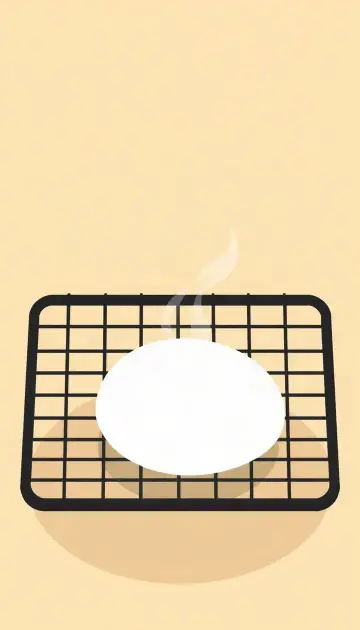
What makes toasted mochi swell up like a balloon is the water trapped inside it.

Believe it or not, mochi actually holds a lot of water.
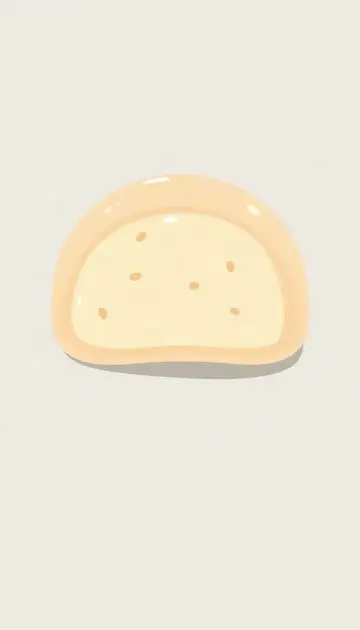
When you toast it, only the surface dries out first, turning into a kind of hard skin.

But the inside is still soft, and its water keeps turning into steam and expanding.
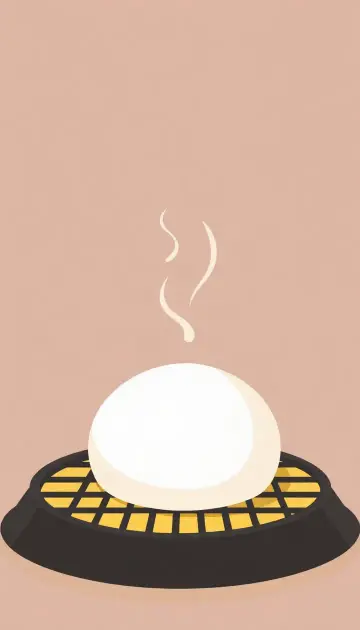
The soft, stretchy dough gets pushed by the steam and puffs up like a balloon.
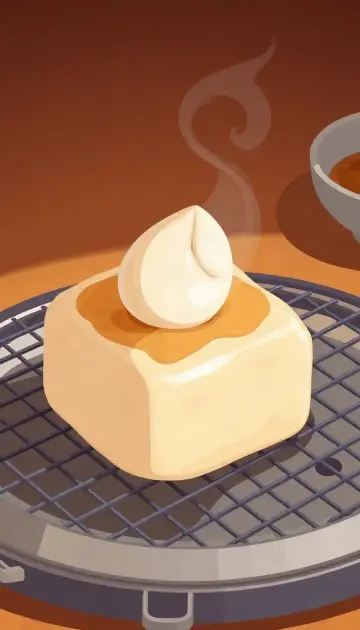
Then, when the thinnest part of the skin tears, the inside pops right out.
Sources
- デンプン粒~水系の糊化にともなう状態変化の微視的および巨視的観察Japanese“Microscopic and Macroscopic Observations of State Changes Accompanying Gelatinization in Starch Granule–Water Systems”Journal of Cookery Science of Japan, Vol. 38, No. 1
- 米の調理特性Japanese“Cooking Properties of Rice”Ministry of Agriculture, Forestry and Fisheries (Japan)
Spotted a mistake in the article or the translation? Let us know.
Report an error (contact form in Japanese, opens in a new tab)