On this page
A closer look
An ordinary pot never gets hotter than 100°C
First, let's look at the limit of an ordinary pot. When you heat water, its temperature rises, but once it hits 100°C (212°F), it boils and goes no higher. The added heat goes into turning water into steam instead.
Turning up the flame doesn't change that. The boiling just gets more vigorous, and the temperature stays at 100°C. That's why stewing comes down to "so many hours at 100°C."
But the boiling point isn't a fixed number. It changes with the surrounding pressure. On a mountaintop, the air pressure is lower, so water boils below 100°C; apply pressure, and the boiling point goes up instead.
A pressure cooker is a "pot that doesn't let steam escape"
What a pressure cooker does is simple: it seals the lid and keeps the steam from escaping.
When water in the pot turns into steam, its volume increases enormously. With nowhere to go, the pressure inside rises. As the pressure rises, the boiling point rises, and the water can keep getting hotter without boiling yet.
This principle isn't limited to home cookware. The food industry does the same thing on a much larger scale. Here's how the Japan Canners Association explains it:
Incidentally, "retort sterilization" means sterilizing at high temperatures above 100°C. Pressure is applied to reach high temperatures (the same as a pressure cooker).
The device called a "retort" is essentially a giant industrial pressure cooker. The fact that the association itself writes "the same as a pressure cooker" is clear confirmation.
A 20°C difference makes a big difference in time
So what do you gain from a higher temperature? The sterilization conditions the association cites show how powerful the effect is.
Canned foods (seafood, agricultural products, meat, prepared dishes, etc.), some bottled foods, and retort pouch foods are generally sterilized under high temperature and pressure in a "retort (high-pressure vessel)" at 120°C or higher for at least 4 minutes.
120°C for 4 minutes. A glossary entry from the Japan Society of Refrigerating and Air Conditioning Engineers cites the same figures as the standard under Japan's Food Sanitation Act:
"For pressure-heat-sterilized foods packed in containers with a pH above 4.6 and a water activity above 0.94, the method shall heat the center of the food at 120°C for 4 minutes, or be a method with equivalent or greater effectiveness."
Here's the key point. This standard specifies 120°C because at 100°C you can't get the same result. Clostridium botulinum, the bacterium behind botulism, forms heat-resistant spores that won't die at 100°C even with prolonged heating. But at 120°C, 4 minutes is enough.
Raising the temperature by just 20°C cuts the required time by orders of magnitude. Chemical reactions and the killing of microbes change sharply with temperature, so a small temperature difference turns into a big time difference.
The same goes for cooking. The reaction that breaks collagen down into gelatin and the reaction that gelatinizes starch both go faster at higher temperatures. That's why beef tendon, bone-in meat, and beans turn tender in a short time in a pressure cooker.
Why even bones get soft
This temperature is exactly why there are canned fish you can eat bones and all. Conditions of 110–120°C for 30–90 minutes show up in another of the association's explanations:
This organic coating is designed so that, during the heat sterilization of canned foods (generally 110–120°C for 30–90 minutes), it does not detach from the metal or allow harmful substances to leach into the food
The bones in canned mackerel or sardines are soft and crumbly not because of some special treatment, but because the heating done for sterilization softens the bones along the way. The same thing happens when you cook fish in a home pressure cooker.
What you gain, and what you lose
High heat is fast. But there's a trade-off. Here's what the association says about nutrition:
Because canned, bottled, and retort pouch foods are heat-sterilized, people often assume they lose a lot of nutrients, or that none are left. It's true that heating has an effect compared with fresh food, but because they are sealed with the air removed and heat-sterilized in a vacuum, many studies have shown that they contain more vitamins and other nutrients than food cooked at home.
In other words, the association acknowledges that heating has an effect, but explains that removing oxygen and sealing the food makes up the difference.
Pressure cookers are in a similar situation. High heat is fast, but heat-sensitive components break down more easily. On the other hand, because the cooking time is shorter, some nutrients survive that would be lost to long, slow heating. The trade-offs aren't simple.
Safety rules
A pressure cooker is a tool that traps hot water and steam under high pressure. The safety valve and pressure indicator are there to manage that pressure.
- Don't open the lid until the pressure has fully come down
- Don't heat it with too little water
- Don't overfill it, so things like bean skins don't block the steam outlet
It's the same reason industrial retorts are operated under strict control. Raising the boiling point means nothing less than creating liquid hotter than 100°C inside the pot.
You might also like
What the video says
With a pressure cooker, your usual stews come out surprisingly fast, right?
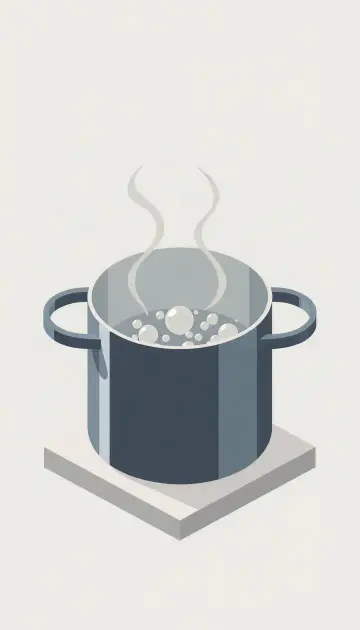
That's actually because the pressure inside the pot goes up, which raises the boiling point of the water itself.

Normally, water boils at 100 degrees Celsius, but inside a sealed pot the pressure rises and the temperature climbs to nearly 120 degrees.
The higher the temperature, the faster the fibers in food soften, so the cooking time ends up much shorter.
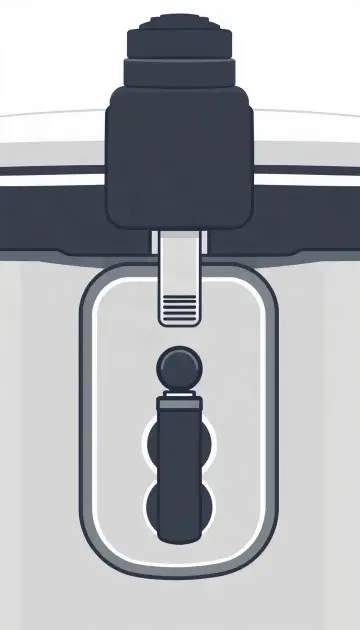
That speed is only possible because the pot has both a structure that can withstand high pressure and a mechanism that safely releases steam.
Sources
- 缶詰、びん詰、レトルト食品の特徴Japanese“Characteristics of Canned, Bottled, and Retort Pouch Foods”Japan Canners Association
- 水分活性(学会誌「冷凍」用語解説)Japanese“Water Activity (Glossary, Journal "Refrigeration")”Japan Society of Refrigerating and Air Conditioning Engineers
- 缶詰、びん詰、レトルト食品の作り方Japanese“How Canned, Bottled, and Retort Pouch Foods Are Made”Japan Canners Association
Spotted a mistake in the article or the translation? Let us know.
Report an error (contact form in Japanese, opens in a new tab)