On this page
A closer look
A blue sky and a red sunset work the same way
Sunlight contains all the colors of the rainbow mixed together. When this light enters the atmosphere, it bumps into nitrogen and oxygen molecules and scatters in every direction. These molecules are much smaller than the wavelength of light, and in the resulting Rayleigh scattering, the shorter the wavelength, like blue and violet, the more strongly the light is scattered. (For more, see our article on why the sky is blue.)
The UK's Met Office explains that in the morning and evening, the sun is low, so its light passes through a thicker layer of atmosphere. Over that long journey, blue light keeps getting scattered off to the sides and drops out of the light traveling straight ahead. As a result, the light that reaches your eyes is rich in longer-wavelength red and orange.
The Nagoya City Science Museum has an exhibit called "Let's Make a Sunset," in which white light is shone through a tube of water containing fine particles. As the light travels down the tube, the color of the tube gradually shifts from blue toward red, and the light that comes out the other end is red. It's an experiment that lets you see with your own eyes how light gets redder the farther it travels through the air.
Stephen Corfidi, a meteorologist at the U.S. National Oceanic and Atmospheric Administration (NOAA), sums up this connection as "sunsets are red because the daytime sky is blue." The light that's turning a sunset red in one place is, at that very same moment, creating a blue late-afternoon sky somewhere farther west.
"Only red light remains" is a bit of an overstatement
The video said that "the blue light gets completely scattered, and only the remaining red light reaches us," but it's more accurate to think of it as "the proportion of red and orange light increases."
Blue light doesn't drop to zero; it decreases little by little the longer the path the light travels. Even in the Nagoya City Science Museum exhibit, the color in the tube doesn't turn red all at once; it "gradually" gets redder as the light moves along. Whether the setting sun looks yellowish, orange, or deep red depends on how high the sun is and on the condition of the air.
And as mentioned above, the same sunlight is creating a blue sky somewhere else. It's easier to understand a sunset not as "the blue light disappeared," but as "the blue light got scattered off to the side along the way, so less of it reaches us."
What paints the sky deep red: the "cloud screen"
In sunsets where the entire sky seems to glow red, clouds play a big role. According to Corfidi, clouds catch the red and orange light of the setting sun like a movie theater screen and reflect it back down to the ground. NASA's Earth Observatory likewise explains that when the sun is low, its light travels a long way through the atmosphere and more blue light gets scattered, and it uses photos to show that the golden color of evening clouds matches the color of the setting sun.
The clouds most likely to put on a vivid show are high- and mid-level clouds like cirrus (wispy streaks) and altocumulus ("sheep" clouds). That's because they sit above the layer of dust and haze near the ground and can catch the light before it gets muddied.
The role of tiny particles in the air (aerosols) is a bit tricky. The Met Office explains that under high pressure, dust and other particles stay suspended in the air and scatter blue light, making a red sky more likely. Corfidi, on the other hand, explains that too much dust and haze near the ground weakens the light itself, dulling the sunset to a whitish yellow or pink, and says that what a vivid sunset needs most is clean air. It seems best to think of it this way: whether particles add red or dull the colors depends on how many there are, how big they are, and how high up they are.
The old saying: "Red at sunset means fair weather, red at sunrise means rain"
In Japan, weather lore based on reading the sky is called kanten bōki (forecasting by watching the sky). Japanese sayings include "a sunset means fair weather tomorrow" and "a red sunrise means rain," and English has a very similar proverb: "Red sky at night, shepherd's delight; red sky in the morning, shepherd's warning."
There's some reasoning behind this. According to the Japan Meteorological Agency, westerly winds called the westerlies blow high above Japan, carrying highs and lows from west to east, so the weather also changes from the west. Seeing a sunset can be taken as a sign that the western sky, where the sun is, is clear and its light is getting through. The Met Office also says the "red sky at night" saying is broadly correct, explaining that high pressure tends to bring good weather and that red skies are more likely under it.
Corfidi uses the example of a sky mostly covered by mid- and high-level clouds, with clear sky only near the horizon. In the mid-latitudes, this kind of sky often appears as a disturbance in the jet stream (an especially strong current within the westerlies) passes overhead, and it marks the boundary between a cloudy area and a clear one. If you see this sky in the morning, moist air aloft is about to spread in from west to east and the weather is likely to turn; in the evening, it's the opposite.
That said, this is only a rule of thumb for what's "likely" to happen. The Met Office also notes that such sayings aren't as accurate as an official weather forecast. Before heading out, be sure to check the forecast too.
Related reading
What the video says
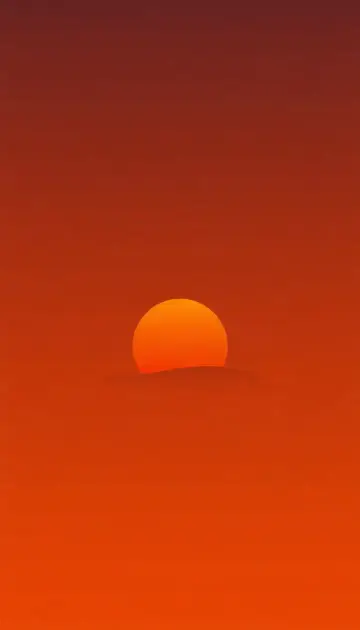
You've probably seen it: that moment at sunrise or sunset when the whole sky turns bright red.

It actually has to do with how far sunlight travels through the air.
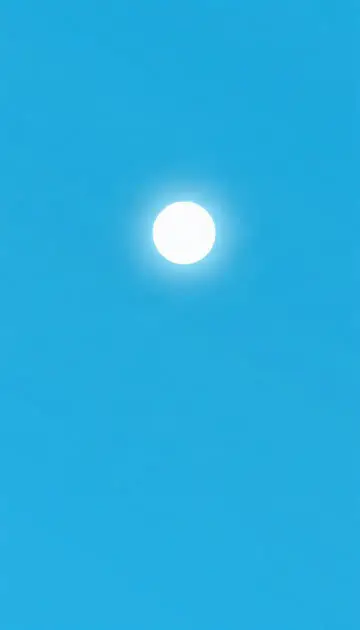
During the day, when the sun is high, its light passes through only a short stretch of atmosphere.
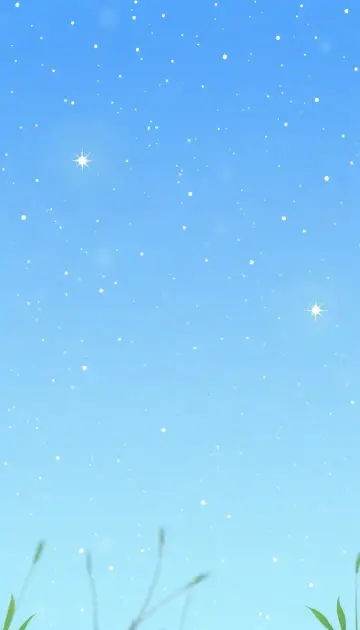
Blue light scatters easily, so the sky looks blue.
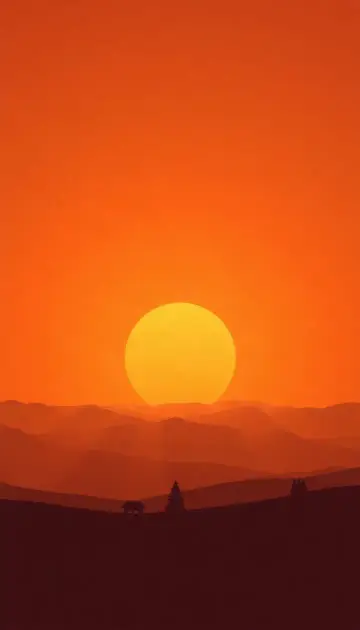
But in the morning and evening, the sun is low, and its light has to travel much farther through the atmosphere.
Along the way, the blue light gets completely scattered, and only the remaining red light reaches us. That's why the sky looks red.
Sources
- Why the sky is blue and sunsets redMet Office (UK)
- The Colors of Sunset and TwilightStephen F. Corfidi, NOAA/NWS Storm Prediction Center, 2014
- L214 夕焼けをつくろう(展示解説)Japanese“L214 Let's Make a Sunset (Exhibit Guide)”Nagoya City Science Museum
- Crepuscular Rays and Light ScatteringNASA Earth Observatory
- Do cows really lie down when it's about to rain?Met Office (UK), 2017
- 天気が西から東へ動くのはどうして?(はれるんランド)Japanese“Why Does the Weather Move from West to East? (Harerun Land, JMA's kids' site)”Japan Meteorological Agency
Spotted a mistake in the article or the translation? Let us know.
Report an error (contact form in Japanese, opens in a new tab)