On this page
A closer look
The order is set by law
The order of the colors on a traffic light isn't just custom. It's laid down in a Cabinet Order called the Order for Enforcement of the Road Traffic Act.
When the three colors are arranged horizontally, the order from the right is "red, yellow, and blue." When they're arranged vertically, the order from the top is red, yellow, blue. (In Japanese, the green light is officially called "blue"; more on that below.)
The Osaka Prefectural Police explanation describes the same order: for horizontal signals, green, yellow, red from the left (as seen from the front); for vertical signals, red, yellow, green from the top.
"Red from the right" and "green from the left" are saying the same thing. Because the law describes the order as seen from the back of the signal, left and right are swapped when you look at it from the front.
The sequence in which the lights come on is also fixed. When a vehicle signal shows the three colors in succession, the order is green → yellow → red.
Why red is on the outside
Why is red at the right end (on horizontal signals) or the top (on vertical ones)?
Because it's the most important light. According to JAF (the Japan Automobile Federation), the main reason the red light sits on the right end is to make the light that signals "stop" easier for drivers to see.
If you think it through, several reasons stack up.
It's less likely to be hidden by trees. Japan drives on the left, so street trees, billboards, and road signs stand on the left side of the road. The left end of a horizontal signal (green) may sometimes get hidden, but the right end (red) is closer to the center of the road and harder to block.
It's visible from the oncoming lane too. When you look at a horizontal signal at an angle, the right end appears closest to you.
Vertical signals are a snow-country solution. Vertical signals are common in snowy regions because their narrower width means less snow piles up on them, and they catch less wind. Even on vertical signals, red is at the very top. Being up high makes it easier to see when snow builds up, or when it would otherwise be hidden behind other vehicles or obstacles.
It's called a "blue light," but it's green
The names of the colors show up in the law, too. The Enforcement Order refers to the green light as "blue" (ao).
The actual light is closer to green. But its legal name is "the blue light." So ao shingo ("blue signal"), the everyday Japanese term for a green light, isn't slang; it's the legal term.
This comes from the history of how Japanese names colors. In older usage, blue and green weren't distinguished, and ao covered a broad range of both. Leafy greens (aona), caterpillars (aomushi), green apples (aoringo), lush green leaves (aoao to shita ha): all of these green things are called ao.
Why the three colors are red, yellow, and green
Before getting to the order, there's also the question of why these three colors were chosen.
Red has the longest wavelength of visible light. Longer wavelengths are less easily scattered by particles in the air, so they carry farther. Red is easy to see even in fog or rain. That's why red was assigned to the most important instruction: "stop."
Green sits on the opposite side from red (close to its complementary color), making it hard to confuse with red. Yellow falls in between.
The color system originally used in railway signals was carried over to signals for cars.
Color vision is taken into account
For people who have difficulty telling red from green, judging a signal by its color alone can sometimes be hard.
That's why having a fixed order matters: you can tell by position. On a horizontal signal, red is on the right end; on a vertical one, red is at the top. Because the order is the same everywhere, you can read the signal by position even if the colors are hard to distinguish.
The law sets the order not only for visibility but also to standardize this "second piece of information," position, across the whole country.
Newer traffic lights are also being designed to make the colors easier to tell apart, mixing a slight orange tint into the red light and making the green light a bit bluer.
It varies by country
By the way, neither the order of the lights nor the sequence in which they change is fully standardized internationally.
Some countries flash the yellow light before switching from green to red, or light red and yellow together before switching from red to green (a signal to get ready to go).
In Japan, the green → yellow → red sequence is set by the Enforcement Order, and the light goes directly from red to green. Red and yellow are never lit at the same time.
The same order and the same way of changing, wherever you go in the country. That's the practical point of having it standardized by law.
You might also like
What the video says
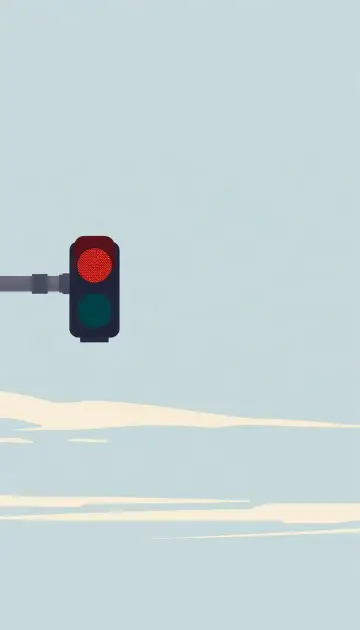
You see traffic lights every day, but have you ever noticed that their colors always come in a set order?
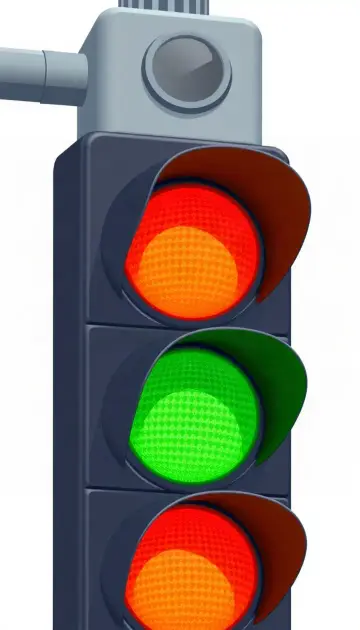
On horizontal traffic lights, the law requires the order to be red, yellow, green, counting from the right. From the driver's seat, red is the light on the far right.
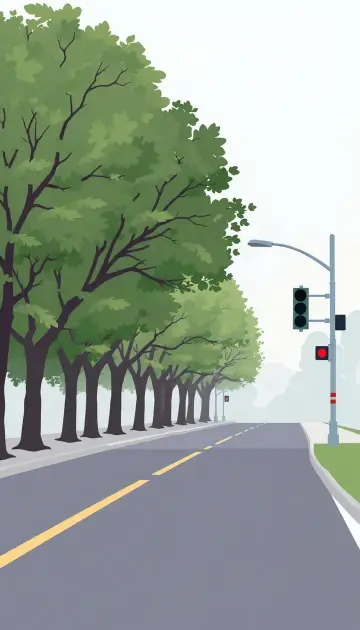
So why is red on the right end? Japan drives on the left, and the left side of the road tends to be lined with trees and signs. When the branches fill out, they can block the signal. So the most important light, red, is said to be placed toward the center of the road, where it's easier to see.
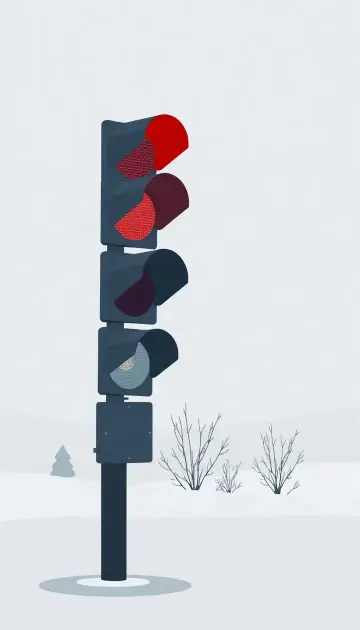
On vertical traffic lights, the law specifies that red goes at the top. The explanation is that red is easier to see up high, where it's less likely to blend into the surrounding scenery. Vertical signals are common in places like snowy regions.
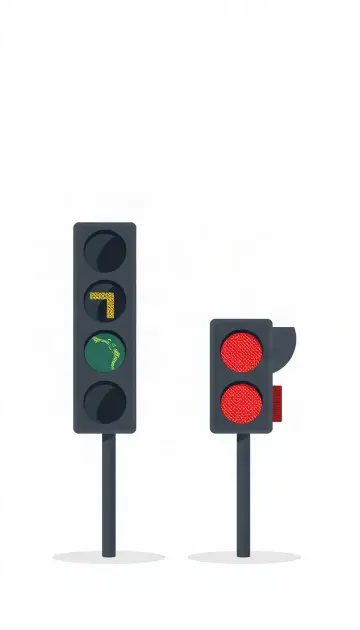
By the way, in countries that drive on the right, the order is sometimes reversed. In South Korea, for example, red is on the far left. Even a single traffic light reflects the traffic conditions of the place it stands.
Sources
- 道路交通法施行令(昭和三十五年政令第二百七十号)Japanese“Order for Enforcement of the Road Traffic Act (Cabinet Order No. 270 of 1960)”e-Gov Law Search (Digital Agency, Japan)
- 質問37:信号の色はどうして「赤」「黄」「青」に決められたのですか?Japanese“Question 37: Why were traffic signal colors set as "red," "yellow," and "blue"?”Osaka Prefectural Police
- なぜ信号機は赤黄緑の3色が使われているのか教えてください。(クルマ何でも質問箱)Japanese“Why do traffic lights use the three colors red, yellow, and green? (Car Q&A Box)”Japan Automobile Federation (JAF)
Spotted a mistake in the article or the translation? Let us know.
Report an error (contact form in Japanese, opens in a new tab)