On this page
A closer look
Salt isn't the only special case
In fact, salt isn't the only food that's allowed to skip a best-before date. The Tokyo Metropolitan Government Bureau of Public Health lists these nine:
- Starch
- Chewing gum
- Frozen desserts
- Sugar
- Ice cream products
- Table salt and umami seasonings
- Alcoholic beverages
- Drinking water and soft drinks (limited to those in glass bottles, excluding those sealed with paper caps, or in polyethylene containers)
- Ice
The reason is spelled out, too: because these foods "basically undergo very little change in quality, omitting the best-before date is permitted."
Sugar, ice, and ice cream being in the same group makes sense once you think about it. Salt isn't some "special food that never spoils" — it's "one of nine foods that the rules say don't need a date."
The only thing that happens to salt is clumping
According to the Salt Industry Center of Japan, salt does not deteriorate in quality except for clumping, even when stored for a long time, so it isn't required to carry a use-by or best-before date.
The main cause of clumping is humidity. In Japan, magnesium carbonate is commonly used as an anti-caking agent to help keep salt from clumping.
Storage tips: watch out for moisture and odors
The precautions the Salt Industry Center lists are very much grounded in real kitchens:
- Where to keep it: Avoid places with big temperature swings or lots of humidity. Specifically, near the stove and under the sink are spots to avoid
- After opening: Don't leave it open. Don't touch it with wet hands
- Odors: Salt easily absorbs smells, so don't keep it near detergents and the like
"Under the sink" is called out by name because moisture tends to build up there. Plenty of people probably keep their salt there, so it might be worth rethinking.
Seasoned salts do have a date
Take a look at the bag you have at home. Seasoned salts mixed with herbs, spices, kombu (kelp), and so on should have a best-before date printed on them. That's because the exemption applies to "table salt" — once other ingredients are added, their own shelf-life issues come into play.
So even when they sit on the same shelf, pure salt and seasoned salt follow different rules.
Related reads
What the video says
Did you know that the salt sold in supermarkets actually isn't required to show a best-before date?

The reason is simple. Sodium chloride, the main component of salt, creates an environment where the microbes that cause spoilage can't live in the first place.

Microbes need water to survive, but salt has a way of soaking up the moisture around it.
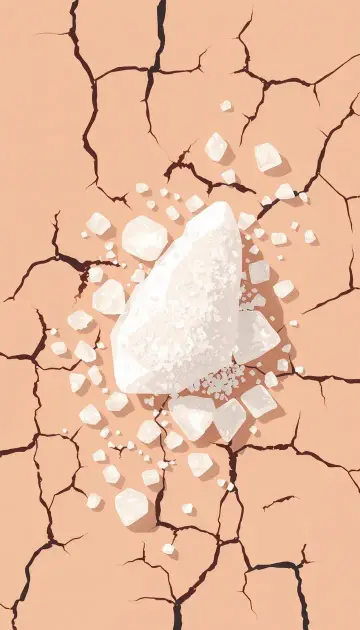
So the microbes get their water taken away, dry up, can't multiply, and die. That's why salt never spoils.
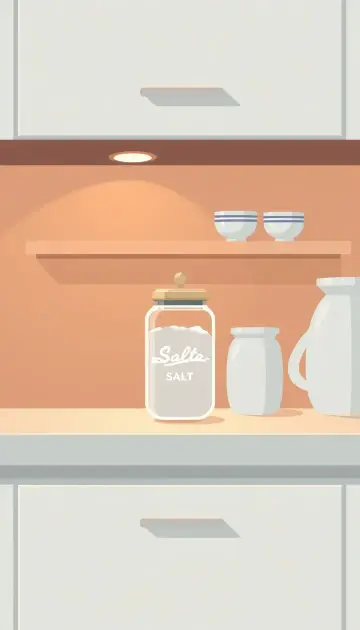
It may clump up from humidity, but it basically never goes bad. That's why salt doesn't have a best-before date.
Sources
- 賞味期限が書かれていない食品があるのは、なぜですか?【食品安全FAQ】Japanese“Why are there foods without a best-before date? [Food Safety FAQ]”Tokyo Metropolitan Government Bureau of Public Health
- よくいただくご質問Japanese“Frequently Asked Questions”Salt Industry Center of Japan
- 加工食品の表示に関する共通Q&A(第2集:消費期限又は賞味期限について)Japanese“Common Q&A on Labeling of Processed Foods (Part 2: Use-by and Best-before Dates)”Ministry of Agriculture, Forestry and Fisheries (Japan)
Spotted a mistake in the article or the translation? Let us know.
Report an error (contact form in Japanese, opens in a new tab)