On this page
A closer look
Text written by a chemical reaction, not ink
The surface of the thermal paper used for receipts is coated with a "leuco dye," which is normally colorless, and a "developer" that makes it show color. At room temperature, both are solid particles, but when the register printer's hot head touches the paper, only that spot melts and mixes, and a chemical reaction turns it black.
In other words, the text on a receipt isn't "printing" with ink laid on top. It's the trace of a chemical reaction that happened inside the paper. If you scratch it hard with your fingernail and a black line appears, that's a sign of the same reaction.
It fades because the bond comes undone
The colored state is an unstable one in which the dye and developer are simply stuck together, and the reaction is known to be reversible. That's why the color gradually fades over time, and hot, humid conditions speed this up.
On top of that, contact with things like the following can make the print disappear all at once:
- Anything containing plasticizers (ingredients that make plastic soft). Examples cited include PVC (vinyl) films and cases, and leather wallets
- Oils, and solvents such as hand cream and alcohol
- Water, and ink from highlighters or stamps
The video opened with "a receipt in your wallet," and leaving one in your wallet is exactly one of the conditions that makes it fade easily. Long exposure to direct sunlight or fluorescent light can also cause discoloration and fading.
Heat doesn't necessarily turn it back to white
The video said the paper is also sensitive to heat and returns to its original white. Heat and humidity do speed up fading, but thermal paper is, after all, paper that develops color when heated. According to manufacturer materials, at 60°C (140°F) or higher, even the unprinted areas can color on their own. If you leave it somewhere hotter than 60°C, rather than the text disappearing, the whole sheet may darken and become hard to read.
Tips for keeping receipts longer
- Store them somewhere cool and dry, away from light
- Don't keep them pressed against PVC cases, plastic wrap, or leather goods
- Don't handle them with hand cream on your hands, and don't stamp on top of them
- For receipts you'll need for a long time, such as proof of purchase for a warranty, make a copy or scan
By the way, things like expressway toll receipts use "long-life" thermal paper, made harder to fade by adjusting the chemical formula and adding a protective surface layer. According to the Oji Group, some types can keep their text for around 10 years when stored under ideal conditions.
Related reads
What the video says

You know how a receipt left in your wallet starts to fade after a while, until you can't read it anymore?

Believe it or not, that receipt was printed without any ink. It's made of a special paper that changes color in response to heat, called thermal paper.
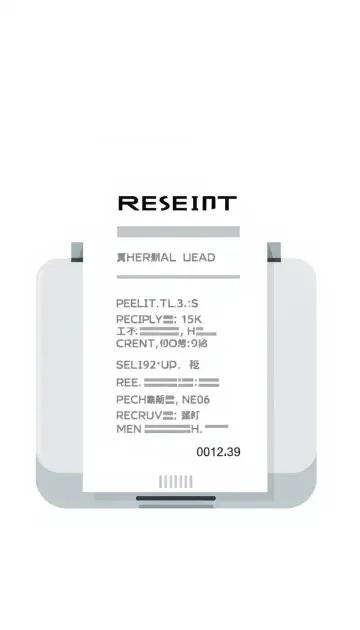
When the register's printer applies heat, the color-forming agent coated on the paper undergoes a chemical reaction and turns black, making the letters and numbers appear.
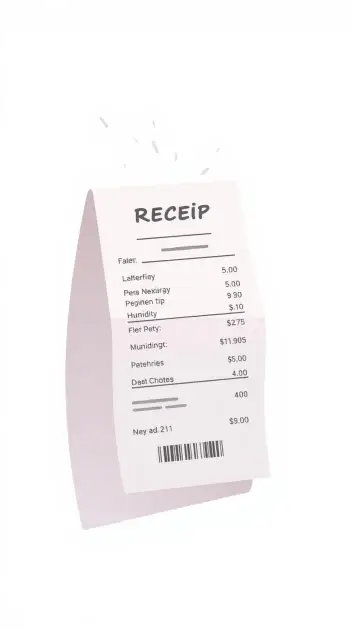
But this color-forming agent is actually sensitive to UV light, heat, and humidity, and over time the reaction fades and the paper goes back to its original white.
If you want to keep a receipt for a long time, it's best to store it somewhere dark and cool, out of the sun.
Sources
- 感熱紙(【技術案内】感熱紙の構造/感熱紙の発色/使用上の注意点)Japanese“Thermal Paper (Technical Guide: Structure of Thermal Paper / Color Development of Thermal Paper / Precautions for Use)”Mitsubishi Paper Mills Limited
- 日常生活のあちこちで使われる感熱紙Japanese“Thermal Paper, Used Everywhere in Daily Life”Oji Holdings Corporation, "OJI TODAY", 2025
- DT-9700 媒体仕様書(3. 取り扱い注意事項)Japanese“DT-9700 Media Specifications (3. Handling Precautions)”Casio Computer Co., Ltd.
- US9656498B2 Heat-sensitive recording bodyOji Holdings Corp, U.S. Patent, 2017
Spotted a mistake in the article or the translation? Let us know.
Report an error (contact form in Japanese, opens in a new tab)