On this page
A closer look
The "two forces" confirmed by research
In 2017, a research team at the University of California, Berkeley took a close look at how shoelaces come untied. They filmed the feet of people running on a treadmill in slow motion to observe what was happening to the knot.
At the moment the foot hits the ground, the base of the knot experiences an acceleration of roughly seven times the force of gravity, and the knot repeatedly gets squashed and springs back. On top of that, the back-and-forth swinging of the leg whips the free ends of the lace (the parts that aren't loops) around and pulls them outward.
Interestingly, simply swinging the leg while seated, or just stomping in place, did not untie the laces, even with the same number of repetitions. The study's conclusion was that laces come untied only when impact and swinging occur together.
Not "little by little" but "all of a sudden"
The video said the knot gradually loosens over hundreds of steps. It's true that it can take many steps before the lace comes undone. But in the observations, there was almost no change for a while, and then once the knot started to loosen, it came completely undone within one or two steps.
As the knot loosens and the free ends get longer, the force pulling on those ends grows stronger, while the loops get smaller and can no longer hold their ground. This imbalance snowballs like an avalanche, which is why laces come undone so suddenly, even though they seemed fine a moment ago.
How you tie it changes how easily it comes undone
The ordinary bow knot comes in two versions, which the study called the "strong knot" and the "weak knot." The only difference is which direction you lay the second layer relative to the first overhand knot.
- Strong knot: The second layer goes in the opposite direction from the first. The knot settles flat, and the loops tend to line up sideways.
- Weak knot: The second layer goes in the same direction as the first. The knot twists, and the loops tend to point up and down (what's often called a "granny knot").
In the experiments, the weak knot came undone much faster and at a much higher rate. If your loops point up and down after tying, try reversing the direction of your first overhand knot. That said, even a strong knot can eventually come undone depending on the conditions.
About the "double knot"
The video said that a double knot makes laces less likely to come undone. Double knotting is a long-standing, commonly used method, but this study compared only the two types of knots described above and did not test the effect of a double knot. What the research does suggest is to start with a strong knot as the base and to tie it tightly. The university's announcement also notes that a tightly tied lace may require more repetitions than a full day's worth of walking before it comes undone.
You might also like
What the video says
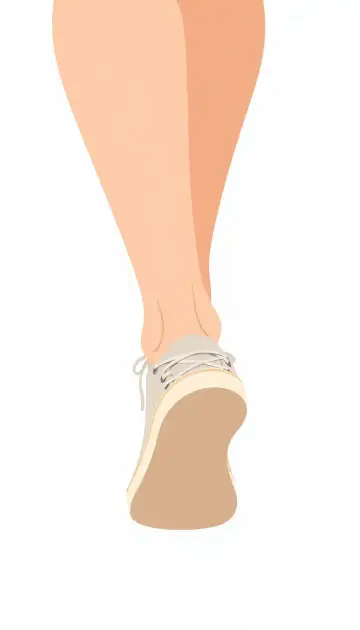
You're just walking along, and suddenly you notice your shoelace has come untied. Ever had that happen?
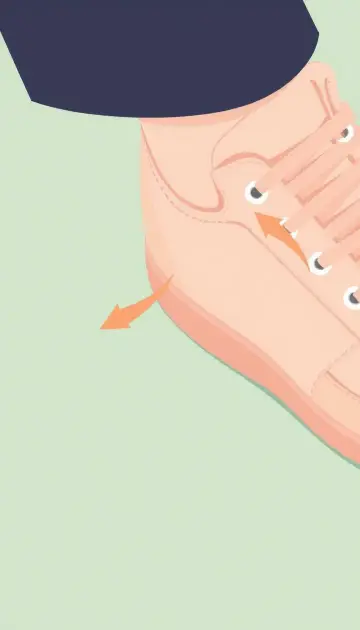
It actually happens because two forces act at the same time with every step you take.
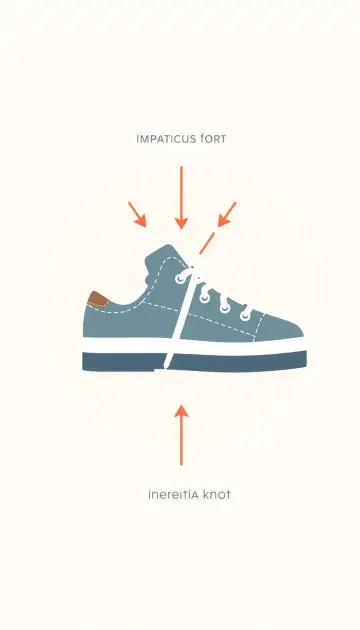
One is "impact," where the shock of your foot hitting the ground loosens the knot slightly. The other is "inertia," the force that pulls on the laces as you swing your foot forward.
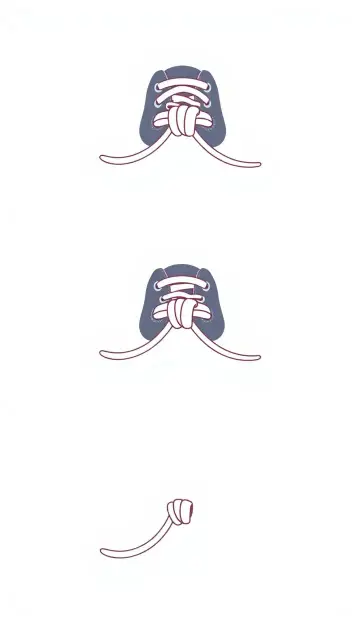
As these two repeat over dozens, then hundreds of steps, the knot gradually loosens until it finally comes undone.
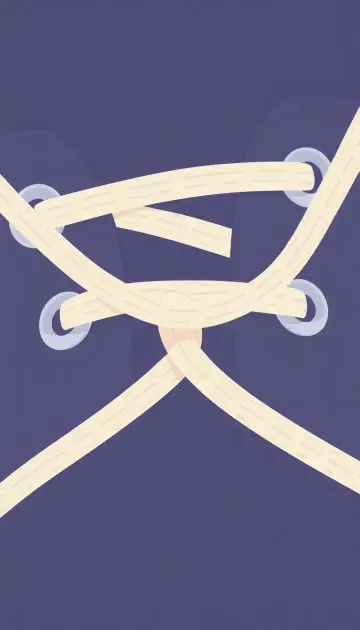
So just tying your laces firmly with a double knot will make them much less likely to come undone.
Sources
- The roles of impact and inertia in the failure of a shoelace knotDaily-Diamond C.A., Gregg C.E. & O'Reilly O.M., Proceedings of the Royal Society A, 2017
- Shoe-string theory: Science shows why shoelaces come untiedUC Berkeley (Berkeley News)
Spotted a mistake in the article or the translation? Let us know.
Report an error (contact form in Japanese, opens in a new tab)