On this page
A closer look
A whole onion won't make you cry
The first thing to point out is that the tear-inducing compound isn't sitting inside the onion ahead of time.
An onion that's only been peeled is harmless. The tears start the moment you cut it. In other words, breaking the cells is the trigger.
When the cells break, ingredients and enzymes that had been kept in separate places meet. A chemical reaction kicks off, and the tear-inducing compound is produced. Cutting is a bit like flipping the switch on a factory.
It all started with something "turning green"
The story of how this research began is fascinating, so here it is in House Foods' own words.
When onion and garlic are mixed and sautéed, they normally form a golden-brown paste. However, a phenomenon was observed in which it turned green instead (greening). We identified the components involved in producing this pigment, scientifically clarified why it turns green, and succeeded in preventing the greening.
It started as a problem on the production floor. And along the way, they noticed something.
An enzyme called alliinase, found in both onion and garlic, is involved in producing the green pigment. We noticed that when this enzyme was prepared from onion, less green pigment was produced than when it was prepared from garlic.
They should have extracted the same enzyme, yet the one from onion produced a weaker reaction. Why?
After investigating the reason in detail, we discovered that the enzyme prepared from onion contained another enzyme in addition to alliinase.
Onions had one more enzyme that garlic doesn't. And what does it do?
When you cut an onion, your eyes sting and tears well up. The enzyme we discovered was, together with alliinase, an essential enzyme for producing this tear-inducing component (the lachrymatory factor).
This is lachrymatory factor synthase. Everyone knows onions make you cry, yet an enzyme essential to that reaction wasn't found until 2002.
Overturning the "alliinase alone" theory
Until then, alliinase was thought to produce the tear-inducing compound in a single step. In reality, it takes two steps.
- Alliinase breaks down a compound in the onion to create an intermediate
- Lachrymatory factor synthase (LFS) turns that intermediate into the tear-inducing compound
That second step had been overlooked. House Foods sums up the significance of the discovery like this:
The discovery of this enzyme was highly regarded not only for clarifying how the tear-inducing component is formed, but also for showing the possibility of creating a dream onion—one that "doesn't cause tears, yet has a strong onion flavor and high health functionality." In 2002, the paper was published in Nature, the world-renowned British scientific journal.
Why a "dream onion"? If you block alliinase, you lose the onion's characteristic flavor along with it. But if you can block just the second step, LFS, you can keep the flavor and reduce only the tears. Learning that these were separate enzymes became a direct guide for breeding.
The discovery seems to have made quite a splash, too.
The discovery of this enzyme was also reported around the world via CNN and news agencies such as AP and Reuters.
And then the "tearless onion" was created
The discovery actually led to a product.
As a result of selective breeding focused on the two enzymes involved in producing the onion's tear-inducing component (alliinase and lachrymatory factor synthase), we succeeded in creating an entirely new onion in which the enzymes' activity is extremely weak and the production of the tear-inducing component is suppressed.
This wasn't genetic modification—it was selective breeding. It was achieved with traditional plant breeding: choosing plants with weak enzyme activity out of many individuals and crossing them.
This success was reported with surprise around the world, including by overseas media such as The Wall Street Journal and The Washington Post.
It came with a bonus trait, too.
The tear-inducing component is also the pungent component that makes your tongue burn when you eat raw onion, so the tearless onion is also an onion with almost no pungency.
The tear compound and the pungent compound turned out to be the same. So a "tearless onion" is also an "onion that's easy to eat raw," which gave it value as a salad onion.
Practical ways to cut down on tears
Once you understand the mechanism, the usual kitchen tips start to make sense.
- Use a sharp knife: Crushing fewer cells means fewer ingredients to react
- Chill it before cutting: Enzymes work more slowly at low temperatures
- Ventilate and keep your face back: The tear-inducing compound is volatile, and if it doesn't reach your eyes, you won't cry
On the other hand, leaving the onion out in the air after cutting doesn't help. The reaction is already finished, so the compound just drifts around.
By the way, this research also won the Ig Nobel Prize in Chemistry in 2013. It's a rare track record: a serious pursuit of an everyday phenomenon that ended up in both a prestigious scientific journal and a humorous prize.
Related reads
What the video says
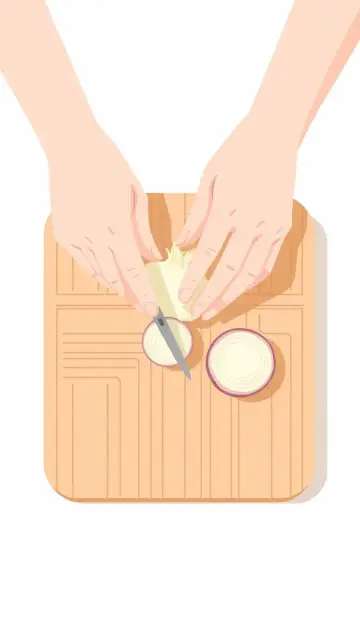
When you cut an onion, the tears just won't stop, right?
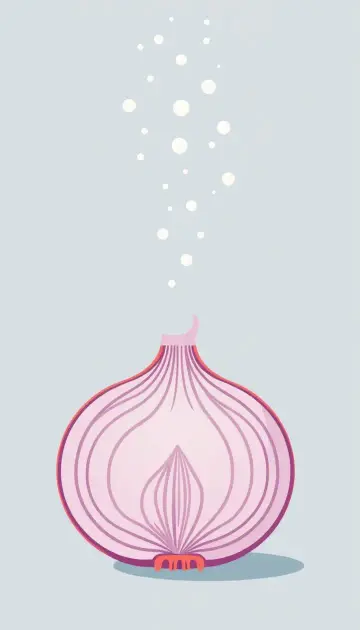
That's actually caused by an eye-stinging gas the onion releases to protect itself.
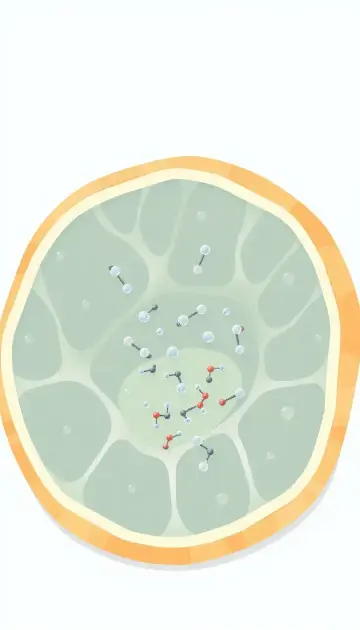
Inside an onion are enzymes that react when it's cut, plus compounds containing sulfur.
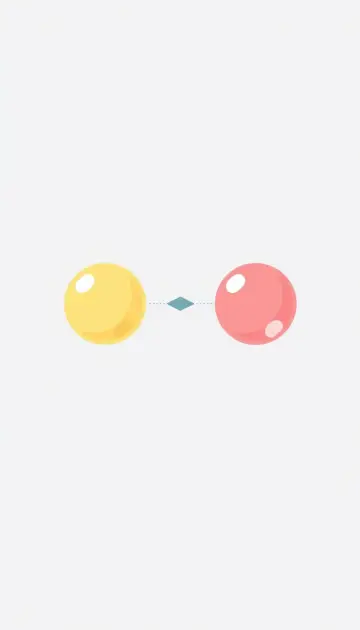
When a knife breaks the cells, these two mix together and turn into a gas that irritates your eyes.

When that gas touches the surface of your eyes, it stimulates your tear glands, and the tears come pouring out.
Sources
- タマネギの催涙成分に関する研究Japanese“Research on the Tear-Inducing Component of Onions”House Foods Group Inc.
- An onion enzyme that makes the eyes water(Nature 419, 685, 2002)Nature
Spotted a mistake in the article or the translation? Let us know.
Report an error (contact form in Japanese, opens in a new tab)