On this page
A closer look
Electricity only flows where there's a "difference"
For electricity to flow, there has to be a continuous path connecting a place with higher voltage to a place with lower voltage. It's a lot like water flowing from high ground to low ground: if you connect two spots at the same height (voltage), the water (electricity) won't flow.
Inside a power line, the voltage drops very slightly along the way from the power plant to your home. But over a short distance like the space between a bird's two feet, that difference is extremely small.
A bird's feet sit at almost the same voltage
When a bird perches on a single power line, its two feet rest on two points on the same wire, just a few centimeters (an inch or two) apart. Since there's almost no voltage difference between its feet, there's no reason for electricity to flow through the bird's body.
On top of that, power lines are made of metal, which makes them a path that conducts electricity very easily. For electricity, it's far easier to keep flowing along the wire than to take a detour through the bird's body. That's why almost no electricity flows through the bird.
Touching two points at once is dangerous
The danger comes when a bird's body "bridges" two points that have a voltage difference between them.
The U.S. Fish & Wildlife Service explains that electrocutions on power poles happen when a bird completes a circuit by touching two energized parts at the same time (for example, two separate wires), or by touching an energized part and a grounded part at the same time.
In the video, we said "if it touched the wire and the ground at the same time," but a flying bird will hardly ever touch the ground itself. What's actually dangerous are parts connected to the ground, like the metal hardware or supports on a utility pole. Accidents happen when, say, a bird is perched on a wire and the tip of its wing touches the pole.
The bigger the bird, the greater the danger
Small birds like sparrows and starlings can hardly ever reach two wires, or a wire and a pole, at the same time, even with their wings spread.
With large birds, though, it's a different story. According to Japan's Ministry of the Environment, the white-tailed eagle is a large eagle measuring about 69–92 cm (27–36 in) long, with a wingspan of 200–245 cm (about 6.5–8 ft). The ministry lists electrocution as one of the threats to white-tailed eagles, alongside collisions with wind power facilities and traffic accidents. Japan's national conservation and breeding program for the white-tailed eagle also names electrocution from contact with power lines and similar equipment as one of the causes of death and injury for this bird.
According to the U.S. Fish & Wildlife Service, distribution poles in particular were once often designed with energized parts spaced close together and frequently left exposed. Birds can end up touching them when taking off or landing, or when the wires sway because many birds land at once.
As countermeasures, the agency says poles can be made safe for birds to perch on by increasing the spacing between energized parts and between energized and grounded parts, and by covering exposed parts with insulating covers.
Birds can cause power outages, too
The danger of electrocution isn't just a problem for birds.
In an article for nippon.com, crow researcher Sugita Shoei writes that crows building nests on utility poles and transmission towers are a frequent cause of disruptions to the power supply. Nest materials can touch the connection points of power lines and cause outages affecting thousands of households. Hokuriku Electric Power Company patrols its poles and removes nests that could cause outages every year; during the 2018 nesting season (February to May), it removed as many as 15,880 nests.
The sight of birds resting side by side on a power line is peaceful, but beneath their feet, a little bit of physics about electrical "differences" is at work.
Related reading
What the video says
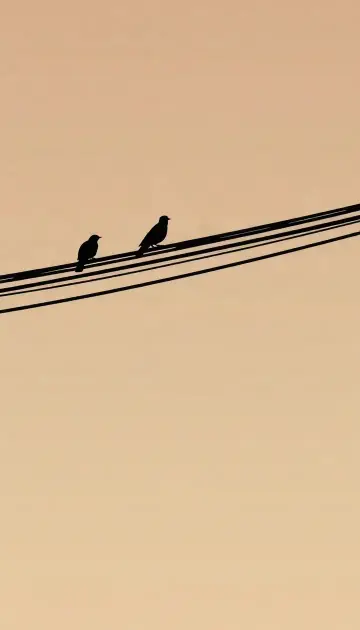
Birds lined up along a power line can usually perch there without getting electrocuted.

Electricity tends to flow from places with higher voltage to places with lower voltage.
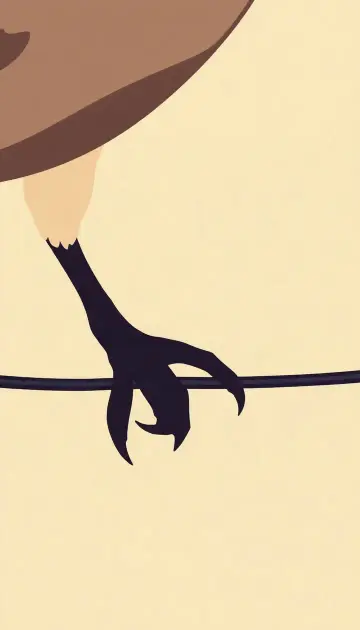
Both of a bird's feet are simply resting on the same single wire, at nearly the same level.
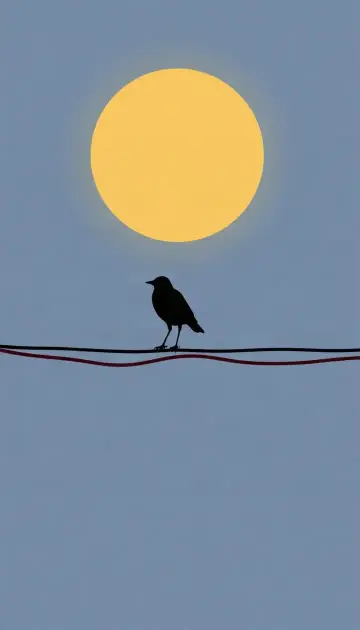
Since there's almost no voltage difference, almost no electricity flows through its body.
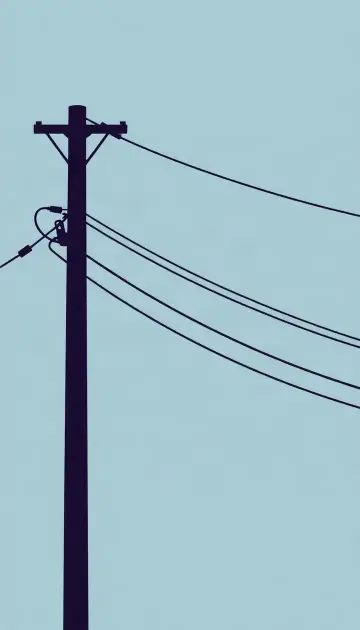
If a bird touched both the wire and the ground at the same time, a voltage difference would arise and it would be in danger.
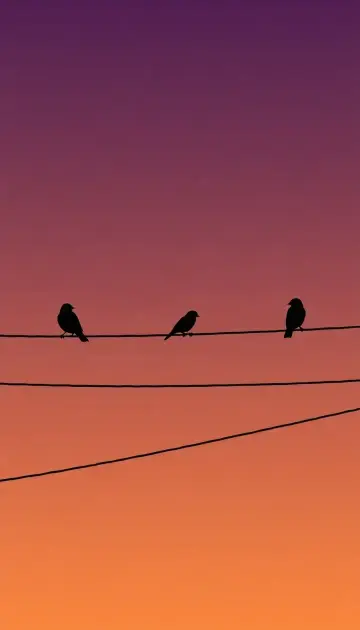
As long as they touch only one wire, birds can rest their wings safely.
Sources
- Avoidance and Minimization Measures: Power LinesU.S. Fish & Wildlife Service
- オジロワシJapanese“White-tailed Eagle”Ministry of the Environment (Japan)
- オジロワシ保護増殖事業計画Japanese“White-tailed Eagle Conservation and Breeding Program”Ministry of Education, Culture, Sports, Science and Technology; Ministry of Agriculture, Forestry and Fisheries; Ministry of Land, Infrastructure, Transport and Tourism; Ministry of the Environment (Japan) (published by the Hokkaido Regional Forest Office), 2005
- 最も身近な野鳥カラス:人間に寄り添って暮らす知恵者Japanese“Crows, Our Most Familiar Wild Birds: Clever Creatures Living Alongside Humans”Sugita Shoei, nippon.com, 2021
Spotted a mistake in the article or the translation? Let us know.
Report an error (contact form in Japanese, opens in a new tab)